
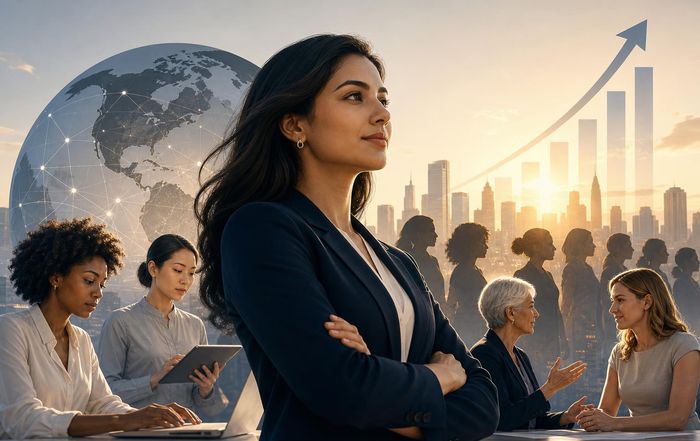
The Future of Women's Economic Influence
A Defining Economic Story of the 21st Century
By 2026, women's economic influence has moved from being a peripheral narrative to one of the central forces reshaping global markets, leadership norms, and social expectations. Across continents, from the United States and Canada to Germany, Singapore, South Africa, and Brazil, women are no longer only participating in the economy; they are redesigning its rules, priorities, and measures of success. For Herstage and its global readership, this transformation is not an abstract trend but a lived reality, intersecting with leadership, self-improvement, health, education, and lifestyle choices that define women's daily experiences.
While progress remains uneven and structural barriers persist, the direction of travel is unmistakable. The accelerating participation of women in labor markets, entrepreneurship, investment, and policy-making is altering how capital is allocated, how organizations are led, and how value is defined. As institutions such as the World Bank, International Monetary Fund, and OECD increasingly frame gender equality as an economic imperative rather than a social add-on, the future of women's economic influence is emerging as one of the most powerful levers for sustainable global growth.
From Participation to Power: The Shift in Economic Roles
In earlier decades, the conversation around women and the economy centered heavily on participation rates and access to jobs. By 2026, the focus has shifted toward power, decision-making, and ownership. Women are moving from being primarily workers and consumers to being capital allocators, founders, policy shapers, and influential voices in boardrooms from London and Paris to Seoul and São Paulo.
Labor force participation among women has grown in many advanced and emerging economies, supported by policy reforms in childcare, parental leave, and flexible work. Organizations such as the International Labour Organization have chronicled how these changes increase productivity and resilience in national economies. At the same time, women's entrepreneurial activity is gaining momentum globally, with high-growth ventures emerging in technology, health, sustainable food systems, and creative industries. This shift from participation to power is not only about representation; it is about the ability to influence strategic direction, resource allocation, and market standards in ways that reflect women's experiences and priorities.
For readers of Herstage, this evolution is mirrored in the platform's focus on women's stories and achievements, which highlight how economic influence arises not only from formal titles, but from the cumulative impact of daily choices, leadership decisions, and community initiatives across regions as diverse as North America, Europe, Asia, Africa, and South America.
The Global Wealth Transfer and Women as Financial Decision-Makers
One of the most consequential shifts shaping the future of women's economic influence is the global transfer of wealth now underway. Over the coming decades, large volumes of assets are expected to move across generations and between spouses, with women poised to control an increasingly significant share of global private wealth. Financial institutions such as UBS and Credit Suisse have noted that women are rapidly becoming primary decision-makers for family investments, philanthropic strategies, and long-term financial planning.
This trend is especially visible in regions with aging populations such as Europe, Japan, and North America, where widows and daughters are inheriting substantial assets, while in high-growth markets like China, India, and Brazil, self-made women are building fortunes through entrepreneurship and executive leadership. As these women shape portfolios, they often bring different priorities to the table, including stronger interest in sustainable investing, health innovation, inclusive education, and community development. Those who want to understand the broader context of this wealth shift can explore analyses on platforms such as OECD and World Economic Forum.
For Herstage, which engages women who are increasingly active in investment decisions, this wealth transfer underscores the importance of financial literacy, strategic planning, and confidence in navigating complex markets. As women assume greater control over capital, their decisions will influence which businesses grow, which technologies are funded, and which social and environmental outcomes are prioritized.
Leadership, Governance, and the Redesign of Corporate Culture
The rise of women in leadership is one of the most visible indicators of shifting economic power. From Fortune 500 boards in the United States and the FTSE 100 in the United Kingdom to leading companies in Germany, France, and Australia, women are steadily gaining seats at the top decision-making tables. Governance codes and regulatory frameworks in regions such as the European Union have accelerated this trend through disclosure requirements and, in some cases, board diversity targets.
However, the future of women's economic influence is not merely about counting the number of women in executive roles; it is about how their presence is reshaping governance norms and corporate culture. Research from institutions such as Harvard Business School and INSEAD has highlighted how diverse leadership teams can improve risk management, foster innovation, and strengthen long-term strategic thinking. Women leaders frequently bring different perspectives on stakeholder engagement, workplace flexibility, and responsible supply chains, which in turn influence how organizations respond to global challenges such as climate change, geopolitical instability, and technological disruption. Readers can explore more about leadership transformation to understand how these shifts are experienced at an individual and organizational level.
In the coming years, as generational change intersects with diversity efforts, boards and executive teams are likely to become more reflective of the societies they serve. This evolution will not be uniform, and some regions will move faster than others, but the trajectory suggests that women's leadership will be increasingly central to how companies define success, manage risk, and engage with employees, customers, and communities.
Self-Improvement, Confidence, and the Inner Architecture of Influence
Economic influence is not only a function of external opportunities; it is also shaped by internal narratives, skills, and habits that determine how women see themselves and how they navigate power structures. The future of women's economic influence will be deeply connected to ongoing investments in self-improvement, confidence building, and lifelong learning. Platforms like Coursera, edX, and LinkedIn Learning have opened global access to high-quality education in finance, technology, leadership, and entrepreneurship, enabling women from Bangkok to Berlin and from Lagos to Los Angeles to upgrade their skills on flexible schedules.
At the same time, coaching, mentoring networks, and professional associations are helping women confront imposter syndrome, negotiate more effectively, and articulate their ambitions with clarity and conviction. For the Herstage community, the interplay between personal growth and economic empowerment is a recurring theme, reflected in resources that encourage readers to invest in their own development, such as the content available in self-improvement and career sections.
As the world of work continues to evolve with automation, artificial intelligence, and remote collaboration, women who cultivate adaptability, digital fluency, and strategic thinking will be well positioned to shape the next wave of economic innovation. The inner architecture of influence-mindset, resilience, and clarity of purpose-will become as important as external credentials in determining who leads and who follows in this new landscape.
Health, Wellbeing, and the Economics of Care
The COVID-19 pandemic and its aftermath underscored the economic centrality of health and care systems, as well as the disproportionate burden that unpaid and underpaid care work places on women. Organizations such as the World Health Organization and UN Women have documented how women globally carry a significant share of caregiving responsibilities, often at the cost of their own career progression and financial security. As societies grapple with aging populations in countries like Japan, Italy, and Germany, and with evolving family structures worldwide, the economics of care will be an essential determinant of women's future influence.
In 2026, there is growing recognition that care infrastructure-childcare, eldercare, healthcare access, and mental health support-is not a private issue but a public economic priority. Investments in high-quality, affordable care services can unlock women's labor force participation, entrepreneurial activity, and educational attainment. Those interested in understanding the policy dimension can review analyses from World Bank and UN Women.
For Herstage, which engages readers at the intersection of health, lifestyle, and ambition, this conversation connects directly to content on health and wellbeing. As women demand more supportive workplace policies, flexible arrangements, and recognition of caregiving as a shared responsibility, they are reshaping organizational norms and public debates. Over time, this has the potential to redistribute both paid and unpaid work more equitably, enabling women to exercise greater economic influence without sacrificing their wellbeing.
Food, Sustainability, and Women at the Center of Consumption and Innovation
Food systems illustrate vividly how women's economic influence operates simultaneously as consumers, producers, innovators, and community leaders. From farmers in sub-Saharan Africa and Southeast Asia to food entrepreneurs in Canada, Spain, and New Zealand, women are central to how food is grown, distributed, and consumed. Global institutions such as the Food and Agriculture Organization have long emphasized that empowering women in agriculture can significantly increase food security and reduce poverty.
At the same time, urban and middle-class women around the world are driving demand for healthier, more sustainable, and ethically produced food. This consumer influence shapes how major food companies, retailers, and startups design products, manage supply chains, and invest in innovation. Those seeking a broader view of sustainable food systems can learn more about global food trends and how they intersect with climate resilience and public health.
For Herstage, food is not only a matter of taste and culture but also a lens on economic agency, explored in dedicated sections such as food and lifestyle. As women increasingly lead ventures in plant-based cuisine, functional nutrition, and sustainable packaging, they are demonstrating how economic influence can be exercised in ways that align profitability with planetary and personal wellbeing.
Education, Skills, and the Digital Transformation of Opportunity
The future of women's economic influence is inseparable from the future of education. Across Europe, Asia, North America, and beyond, women have made remarkable gains in educational attainment, often surpassing men in tertiary enrollment and graduation rates. Institutions such as UNESCO and the World Economic Forum have highlighted how these gains translate into higher earning potential, leadership opportunity, and innovation capacity, particularly when women pursue studies in science, technology, engineering, and mathematics.
However, the digital transformation of the global economy introduces new challenges and opportunities. Women remain underrepresented in many high-growth technology roles, from artificial intelligence engineering to cybersecurity and fintech entrepreneurship. Addressing this imbalance will be critical if women are to shape the design and governance of technologies that will define future markets and social interactions. Those interested in the policy and research dimensions of this issue can explore resources from UNESCO and Brookings Institution.
For Herstage readers, education is both a foundation and a continuous journey, reflected in the platform's education-focused content and its emphasis on lifelong learning as a strategic asset. As more women acquire advanced skills in data, design, digital marketing, and product development, they will be better positioned not only to participate in the digital economy, but to lead its evolution.
Beauty, Fashion, and the Economics of Cultural Influence
Beauty and fashion, often dismissed historically as peripheral or purely aesthetic domains, have become powerful arenas for women's economic and cultural influence. Women dominate these sectors as consumers, creators, entrepreneurs, and executives, driving multibillion-dollar industries that shape global trends from New York and Milan to Seoul and Stockholm. The rise of direct-to-consumer brands, social commerce, and influencer economies has enabled women to convert personal style, expertise, and community-building into substantial businesses.
Organizations such as L'Oréal, Estée Lauder, and numerous independent labels led by women are redefining standards of representation, inclusivity, and sustainability. Consumers, especially younger women in regions such as the United Kingdom, France, South Korea, and Brazil, are demanding transparency in supply chains, ethical sourcing, and authentic messaging. Those who want to understand broader shifts in consumer behavior can consult analyses from McKinsey & Company and Deloitte.
Within Herstage, beauty and fashion are treated not as superficial concerns but as expressions of identity, agency, and economic creativity, explored in sections such as beauty, fashion, and glamour. As women continue to build brands that reflect diverse cultures and body types, they are demonstrating how economic influence can reshape cultural narratives and expand what is considered aspirational, professional, and powerful.
Mindfulness, Purpose, and Values-Driven Capital
An important dimension of women's economic influence in 2026 is the growing alignment between financial decisions and personal values. Many women investors, entrepreneurs, and executives are integrating mindfulness, purpose, and social impact into their economic choices, whether through impact investing, mission-driven companies, or philanthropic initiatives. This trend is visible across geographies, from Scandinavia and the Netherlands to Singapore and New Zealand, and it is reinforced by global conversations around environmental, social, and governance (ESG) criteria.
Institutions such as Global Impact Investing Network and PRI (Principles for Responsible Investment) have documented the expansion of capital flows that seek both financial returns and measurable social or environmental outcomes. Women, who often sit at the intersection of community needs and financial decisions, are well positioned to lead in this space. Those who wish to learn more about sustainable business practices can explore resources from the UN Environment Programme, which highlight how values-driven strategies can create long-term resilience.
For Herstage, mindfulness and purpose are not abstract ideals but practical tools for navigating ambitious careers and complex lives, as reflected in the platform's mindfulness content. As women integrate reflection, ethical clarity, and mental wellbeing into their financial and professional decisions, they are shaping a model of economic influence that prioritizes both impact and integrity.
Policy, Regulation, and the Architecture of Opportunity
While individual ambition and corporate initiatives matter, the future of women's economic influence will also depend heavily on public policy and regulatory frameworks. Governments in countries such as Canada, Sweden, Denmark, and New Zealand have shown that targeted policies-ranging from parental leave and childcare support to pay transparency and anti-discrimination laws-can accelerate women's economic empowerment. Multilateral organizations including the International Monetary Fund and World Bank increasingly argue that closing gender gaps in labor markets, credit access, and entrepreneurship is essential for achieving robust, inclusive growth.
Policy debates in regions as varied as the European Union, ASEAN, and the African Union now routinely include gender-responsive budgeting, financial inclusion, and digital access as key priorities. Those interested in the macroeconomic rationale can explore analyses from IMF and World Bank, which quantify the GDP gains associated with greater gender equality. Over the next decade, the countries and regions that make the most strategic investments in women's economic participation are likely to enjoy stronger innovation ecosystems, more resilient social contracts, and greater competitiveness.
For Herstage, which speaks to a global audience navigating different legal and cultural contexts, this policy dimension underscores why personal strategies must be complemented by systemic change. Economic influence is strongest when individual capability meets supportive structures, and when women's voices are represented not only in companies and communities but also in parliaments, ministries, and central banks.
A Future Written with Women at the Center
Looking ahead from 2026, the future of women's economic influence is both promising and unfinished. The trends are clear: greater control over wealth, rising leadership in public and private sectors, expanding access to education and digital tools, and growing alignment between values and capital. At the same time, persistent gaps in pay, representation, safety, and access to finance remain, particularly for women of color, migrant women, and those in low-income and conflict-affected regions.
The next chapter will be shaped by how effectively societies address these inequities while harnessing the full potential of women's contributions. Businesses that recognize women as strategic partners rather than niche segments, governments that design policies around inclusive growth, and financial institutions that innovate for diverse needs will be better prepared for the realities of a global economy in which women's influence is not optional but foundational.
For Herstage, the mission is to document, interpret, and support this transformation, providing a platform where women's experiences in leadership, self-improvement, health, education, career, and lifestyle are treated as central to the global economic story. Readers who wish to dive deeper into these interconnected themes can explore the broader ecosystem of content at Herstage's home page, as well as focused sections on business and economic trends and global developments in world affairs.
As women across continents continue to claim their place as architects of economies, cultures, and institutions, the question is no longer whether they will shape the future, but how fully their influence will be recognized, valued, and integrated into the design of a more equitable and prosperous world.
