
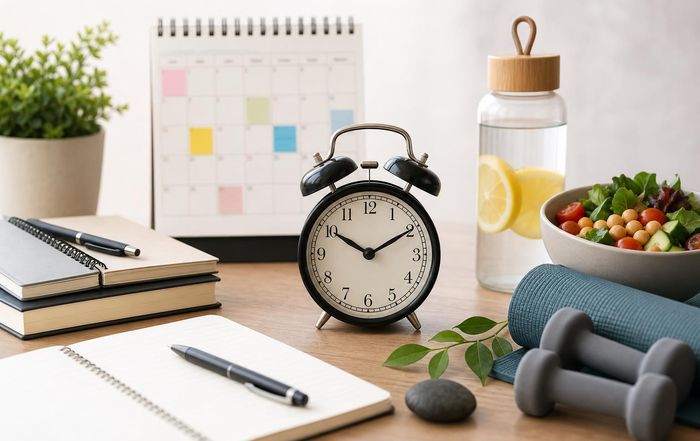
Healthy Strategies for Managing Busy Schedules
The men and women who turn to HerStage are navigating some of the most demanding schedules in history, balancing careers, caregiving, education, health, and personal aspirations across time zones from New York to Singapore and from London to Johannesburg. The acceleration of hybrid work, the normalization of side businesses, and the constant connectivity of digital tools have created a culture in which "busy" is often worn as a badge of honor, yet the costs of unmanaged busyness on physical health, mental wellbeing, and long-term career performance are increasingly visible. Healthy strategies for managing busy schedules are no longer a luxury or a lifestyle trend; they are a core component of sustainable leadership, professional resilience, and personal fulfillment for women worldwide, and they sit at the heart of what HerStage seeks to champion across its coverage of women's lives and stories.
The New Reality of Busyness for Women
Across the United States, Europe, Asia, and beyond, women are assuming more leadership roles in organizations, launching more ventures, and pursuing more advanced education, even as they continue to carry a disproportionate share of unpaid care work. Research shared by McKinsey & Company highlights how women leaders are driving cultural change yet remain more likely to experience burnout and pressure to be "always on." Learn more about how women's leadership is reshaping modern workplaces at McKinsey's Women in the Workplace research. This intersection of professional ambition and societal expectations creates a unique pattern of busyness that demands strategic, health-centered solutions rather than simplistic time-management tips.
At the same time, global economic uncertainty, climate-related disruptions, and geopolitical shifts have intensified performance expectations in many industries. Organizations in London, Berlin, Toronto, Sydney, and Singapore increasingly expect employees to adapt to changing markets with agility and emotional resilience, while digital platforms make it possible to work across time zones without clear boundaries. The result is a daily reality in which messages arrive at midnight, meetings span continents, and family responsibilities remain firmly anchored in local time. Within this context, HerStage positions healthy schedule management as a key leadership competency that supports not only individual women but also the teams, families, and communities that depend on them, an approach reflected across its leadership insights and career coverage.
Redefining Productivity: From Output to Sustainable Performance
For many years, productivity in business cultures across North America, Europe, and Asia has been measured primarily in output-hours logged, emails sent, and tasks completed. However, leading organizations such as Harvard Business School and MIT Sloan School of Management now emphasize that sustainable high performance depends on energy management, cognitive capacity, and psychological safety. Explore how modern productivity frameworks are evolving through resources from Harvard Business Review. In practice, this means that the most effective leaders are reframing productivity as the ability to deliver consistent, high-quality results over time, without sacrificing health, relationships, or ethical standards.
For women operating in fast-paced environments from Silicon Valley to Seoul, this shift is particularly significant. It acknowledges the reality that high performance must coexist with caregiving responsibilities, community engagement, and personal health goals, instead of forcing impossible trade-offs. By integrating evidence-based wellbeing practices into daily routines, women can protect their mental clarity, emotional balance, and physical stamina, enabling them to sustain demanding roles in technology, finance, healthcare, education, and the creative industries. Readers who follow HerStage for self-improvement guidance will recognize this as a move away from perfectionism and toward intentional, values-driven living.
The Science of Stress and Cognitive Overload
Understanding why busy schedules feel so overwhelming begins with the science of stress and cognitive load. The human brain has limited working memory, and constant context switching-jumping from a client call to a school message to a social media notification-depletes mental energy and increases the likelihood of errors. The American Psychological Association has documented how chronic stress from such overload can impair decision-making, reduce emotional regulation, and contribute to anxiety and depression. Learn more about psychological stress and its impact on performance at the American Psychological Association.
Women, particularly those in mid-career leadership roles in cities like New York, London, Frankfurt, and Tokyo, often carry invisible mental loads: remembering family appointments, tracking household logistics, managing elder care, and holding emotional space for others. This mental load is rarely reflected in job descriptions or performance reviews, yet it profoundly shapes how busy schedules feel. Leading health institutions such as the World Health Organization have emphasized that unmanaged chronic stress is a significant risk factor for cardiovascular disease, sleep disorders, and compromised immune function. Explore global perspectives on stress and health at the World Health Organization. Recognizing this link between overloaded schedules and long-term health risks is the first step toward adopting healthier strategies that align with the wellbeing focus of HerStage's health coverage.
Designing a Schedule Around Energy, Not Just Time
One of the most powerful shifts for women managing demanding lives in 2026 is moving from time-based planning to energy-based planning. Instead of filling every available hour, effective schedule design begins with identifying when energy is highest, when focus is sharpest, and when rest is most needed. Research from institutions such as Stanford University and University College London has highlighted the importance of circadian rhythms and ultradian cycles in determining cognitive performance. Readers can explore how biological rhythms shape productivity through resources from Stanford Medicine.
In practical terms, this means scheduling the most complex, high-stakes work-strategic planning, creative problem-solving, financial analysis, or negotiations-during peak focus windows, which for many people fall in the late morning or early afternoon. Routine tasks such as email responses, administrative paperwork, or basic reporting can be reserved for lower-energy periods. For women in leadership roles, especially those guiding teams across Europe, Asia, and North America, this approach can be integrated with intentional boundary-setting around meetings, ensuring that strategic thinking is not fragmented by endless video calls. This energy-centered planning philosophy aligns with the personal optimization themes found across HerStage sections on career development and business strategy, where readers are encouraged to design work in ways that respect human limits.
Boundaries, Saying No, and the Power of Strategic Trade-Offs
Healthy schedule management in 2026 is inseparable from the ability to set boundaries and make strategic trade-offs. In a culture where digital tools make everyone perpetually reachable, women in New York, Paris, Johannesburg, and Singapore often feel pressure to respond immediately to every request, fearing that opportunities may disappear if they do not say yes. However, research from organizations such as The Mayo Clinic shows that chronic overcommitment significantly increases the risk of burnout, emotional exhaustion, and reduced job satisfaction. Learn more about burnout and its prevention at Mayo Clinic.
Strategic boundary-setting involves clarifying core priorities and aligning commitments accordingly. This might mean limiting evening meetings to protect family dinners, defining specific "deep work" hours when notifications are silenced, or declining non-essential tasks that do not advance key goals. For women leaders, this also includes modeling healthy boundaries for their teams, signaling that rest and recovery are not signs of weakness but essential components of long-term success. HerStage regularly highlights women executives and founders who have redefined success on their own terms, offering readers practical inspiration within its leadership and world affairs coverage that spans continents and cultures.
Nourishing the Body: Food as a Performance Strategy
A busy schedule is often reflected first in food choices, with rushed meals, skipped breakfasts, and late-night snacking undermining both energy levels and long-term health. Yet nutrition is one of the most controllable levers for sustaining performance in demanding roles. Leading institutions such as Harvard T.H. Chan School of Public Health emphasize that balanced, nutrient-dense meals support stable blood sugar, cognitive function, and mood regulation. Readers can explore practical guidance on healthy eating patterns at the Harvard Nutrition Source.
For women managing careers and families in cities from Toronto to Bangkok, this might involve preparing simple, high-protein breakfasts that prevent mid-morning crashes, planning batch-cooked lunches for busy workweeks, or choosing whole foods over ultra-processed convenience options whenever possible. In Mediterranean countries such as Italy and Spain, traditional dietary patterns rich in vegetables, legumes, olive oil, and fish offer powerful models for heart-healthy living, while in Nordic countries, emphasis on whole grains and seasonal produce supports sustained energy. HerStage extends this conversation through its food coverage, where recipes, cultural traditions, and nutrition insights intersect to support women who want to eat well without adding stress to already full calendars.
Movement, Sleep, and the Physiology of Resilience
No strategy for managing a busy schedule can be complete without addressing movement and sleep, two pillars that underpin physical resilience and emotional stability. Leading health organizations, including the Centers for Disease Control and Prevention, recommend regular moderate-intensity physical activity to reduce the risk of chronic disease and improve mental health. Learn more about physical activity guidelines at the CDC. For women balancing demanding jobs and caregiving responsibilities from Los Angeles to Berlin, this often means reframing exercise not as an optional extra but as a non-negotiable element of professional performance.
Short, consistent movement sessions-such as brisk walks between meetings, bodyweight exercises at home, or cycling commutes-can deliver significant benefits for mood, concentration, and stress tolerance. Equally important is sleep, which organizations like the National Sleep Foundation identify as essential for memory consolidation, immune function, and emotional regulation. Explore sleep health resources at the National Sleep Foundation. In 24-hour cities like New York, London, and Hong Kong, where late-night work is normalized, women who protect seven to nine hours of quality sleep are not being indulgent; they are investing in the cognitive clarity and emotional steadiness required for effective leadership, parenting, and decision-making.
Mindfulness, Focus, and the Mental Habits of Calm Under Pressure
In a world of constant notifications, cultivating mental focus and emotional steadiness has become a defining skill for women with busy schedules. Mindfulness practices, whether rooted in traditional contemplative traditions from Asia or adapted into modern secular formats, offer practical tools for managing stress, enhancing concentration, and responding thoughtfully rather than reactively. Research from institutions such as Oxford Mindfulness Centre and University of California, Berkeley has shown that regular mindfulness meditation can reduce perceived stress and improve attention control. Learn more about the science of mindfulness through resources from Greater Good Science Center.
For women in leadership positions across Europe, Asia, Africa, and the Americas, mindfulness does not need to involve long retreats or complex rituals. Short daily practices, such as five minutes of focused breathing before a high-stakes meeting, brief body scans between tasks, or mindful walking during breaks, can help reset the nervous system and restore perspective. On HerStage, this dimension of inner resilience is reflected in its coverage of mindfulness and lifestyle, where mental wellbeing is treated not as a separate domain from work and ambition but as a foundational element of a life lived fully and intentionally.
Digital Discipline: Technology as a Tool, Not a Tyrant
The digital tools that enable global collaboration also contribute to the sense of relentless busyness, particularly for women working across time zones in industries such as finance, technology, media, and consulting. Constant alerts, group chats, and social feeds fragment attention and erode the capacity for deep work. Organizations such as The World Economic Forum have examined how digital overload affects productivity and mental health, offering frameworks for healthier technology use in professional settings. Learn more about digital wellbeing trends at the World Economic Forum.
Healthy schedule management in 2026 increasingly involves digital discipline: defining notification rules, batching communication, and using tools intentionally rather than reactively. This might mean designating specific times for email and messaging, turning off non-essential alerts, and separating work and personal devices where possible. For women entrepreneurs and executives who rely heavily on social media for brand-building and networking, this also involves setting boundaries around online engagement to prevent it from consuming time meant for rest, family, or focused strategy work. HerStage recognizes that digital life is now inseparable from modern careers and offers readers nuanced perspectives on balancing visibility, influence, and wellbeing across its business and guide content.
Appearance, Confidence, and the Emotional Dimensions of Busyness
While discussions of busy schedules often focus on logistics and productivity, there is also an emotional and identity dimension, especially for women who feel pressure to "have it all together" in public-facing roles. From boardrooms in Zurich and Amsterdam to creative studios in Cape Town and São Paulo, expectations around appearance, grooming, and style intersect with self-worth and professional confidence. Reputable platforms such as British Vogue and The Business of Fashion have increasingly highlighted the connection between personal style, identity, and empowerment. Learn more about evolving conversations on fashion and identity at The Business of Fashion.
Healthy strategies for managing busy schedules therefore include simplifying beauty and fashion routines in ways that support confidence without consuming excessive time or mental energy. This might involve developing a streamlined skincare routine, curating a capsule wardrobe that works across professional and social settings, or choosing styles that reflect authenticity rather than external trends. HerStage addresses these themes through its coverage of beauty, fashion, and glamour, emphasizing that self-presentation should be a source of strength and self-expression, not another arena of exhaustion or comparison.
Learning, Growth, and the Role of Education in Navigating Complexity
As industries evolve rapidly under the influence of artificial intelligence, sustainability imperatives, and shifting global markets, ongoing learning has become essential for women seeking to navigate complex careers while maintaining balanced lives. Universities and platforms such as Coursera, edX, and leading institutions including University of Cambridge and National University of Singapore provide flexible learning options that can be integrated into already demanding schedules. Explore flexible learning opportunities at Coursera.
However, the abundance of educational opportunities can itself create pressure, with women feeling compelled to constantly upskill in order to remain competitive in markets from San Francisco to Stockholm. Healthy strategy in this domain involves intentional selection of learning goals aligned with long-term vision rather than reactive enrollment in every new course. HerStage supports this reflective approach through its education coverage, encouraging readers to view learning as a lifelong, purpose-driven journey that enhances both career prospects and personal enrichment, rather than another checkbox in an already overloaded life.
A Global, Integrated Approach to a Sustainable Busy Life
Across continents, from the United States and Canada to Germany, France, South Korea, and South Africa, women in 2026 are rewriting the narrative of what it means to be busy. The old ideal of the endlessly available professional is giving way, slowly but decisively, to a model in which health, boundaries, and intentional living form the foundation of sustainable success. Healthy strategies for managing busy schedules are not about doing more in less time; they are about aligning time, energy, and attention with what truly matters, while protecting the physical and emotional resources needed to lead, care, create, and thrive.
For interactively engaged readers of HerStage, this integrated approach reflects the breadth of their interests, from women's leadership and career growth to self-improvement, health and food, beauty and fashion, and the broader world context in which their lives unfold. By embracing energy-based planning, clear boundaries, nourishing food, restorative movement and sleep, mindful presence, digital discipline, authentic self-presentation, and purposeful learning, women across North America, Europe, Asia, Africa, and South America can transform busyness from a source of depletion into a structured, sustainable, and deeply personal expression of their values and ambitions.
As time continues, HerStage remains committed to offering best new unique perspectives, stories, and practical insights that honor the complexity of women's lives, recognizing that the healthiest strategies for managing busy schedules are those that respect individuality, cultural context, and the evolving realities of a global, interconnected world. Readers who return regularly to HerStage's home will find that every section-from career to lifestyle, from mindfulness to glamour-contributes to a single, unifying message: a busy life can be powerful and purposeful, but only when it is grounded in health, self-respect, and the courage to shape time according to one's own definition of success.
