
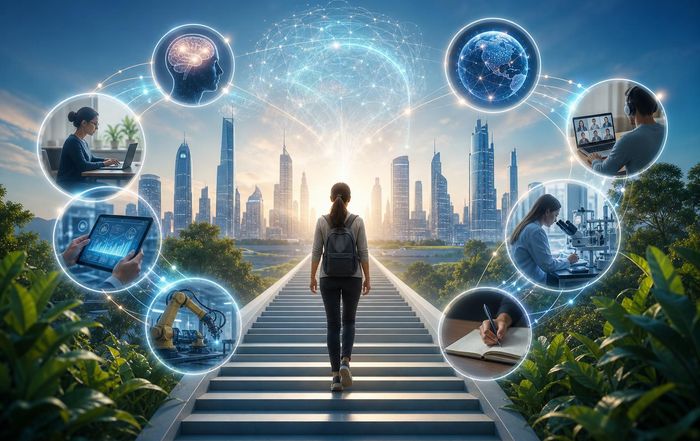
The Future of Lifelong Professional Learning
A New Era for Women's Careers and Continuous Growth
Well now, it's pretty easy to see that lifelong professional learning has shifted from an optional advantage to a central requirement for anyone seeking to build a resilient, meaningful career, and for women around the world this shift carries particular significance as they navigate evolving expectations, technological disruption, and the persistent realities of inequality and bias. On Herstage, where women's leadership, self-improvement, health, lifestyle, and global perspectives intersect, the conversation about lifelong learning is no longer theoretical; it is about how women in New York, London, Berlin, Toronto, Sydney, Paris, Singapore, Johannesburg, São Paulo, and beyond can practically design careers that remain relevant, rewarding, and aligned with their values through every life stage.
The future of lifelong professional learning is being shaped by rapid advances in artificial intelligence, demographic change, the rise of flexible and remote work, and the growing recognition that emotional intelligence, well-being, and purpose are as critical as technical expertise. As organizations from Microsoft and Google to McKinsey & Company and Deloitte redesign their talent strategies, they increasingly expect employees to continuously reskill and upskill, while governments from the United States to Singapore and the European Union invest heavily in digital skills and adult education. In this environment, the women who thrive will be those who approach learning not as a response to crisis, but as an ongoing, strategic practice integrated into work, health, and personal life.
Why Lifelong Learning Has Become Non-Negotiable
Across industries, the pace of technological change continues to compress the shelf life of skills, with research from organizations such as the World Economic Forum showing that many core job skills are being transformed within a few years rather than decades, especially in fields related to data, automation, and green technologies. Professionals in finance, marketing, healthcare, education, manufacturing, and creative industries are all experiencing a similar pattern: what was once cutting-edge becomes standard, and then obsolete, at a speed that challenges traditional models of education and career planning. Learn more about how the World Economic Forum views the future of jobs.
For women, this acceleration intersects with existing career interruptions and transitions, whether due to caregiving responsibilities, geographic mobility, or shifts between full-time employment, entrepreneurship, and portfolio careers. In countries such as Germany, Japan, and Italy, where demographic aging is reshaping labor markets, and in emerging economies across Asia, Africa, and South America, women are increasingly recognized as critical to economic growth, yet they often face limited access to high-quality, flexible learning opportunities. Global institutions like the OECD and UNESCO continue to highlight the importance of adult learning and skills development as drivers of inclusive growth, and their analyses underscore that women's participation in lifelong learning is essential to narrowing gender gaps in pay, leadership, and entrepreneurial success. Explore current perspectives on adult learning and skills policy.
From One-Time Degrees to Continuous Capability Building
The traditional model in which individuals complete formal education in their teens or twenties and then rely on that foundation for an entire career no longer matches reality. Universities in the United States, United Kingdom, Canada, Australia, and across Europe are increasingly offering modular, stackable credentials, micro-degrees, and executive education programs designed for mid-career learners who must adapt to new technologies and business models. Institutions such as MIT, Stanford University, and Imperial College London have expanded online and hybrid programs that allow professionals to acquire advanced skills in areas like data science, sustainability, and leadership without stepping away from their careers. Many of these programs are accessible through platforms like edX and Coursera, which have become global hubs for professional learning.
On Herstage, this shift toward continuous capability building is reflected in content that encourages women to view education not as a past event but as an ongoing asset that can be deliberately shaped. Articles in the education section highlight how women in different regions and industries are combining short courses, mentorship, and experiential learning to stay ahead of change. This evolving landscape favors those who can identify critical skills gaps, choose learning experiences that align with strategic goals, and translate new knowledge into visible impact at work.
Digital Platforms, Microlearning, and AI-Powered Personalization
Digital learning platforms have transformed how professionals access knowledge, with microlearning, mobile-first content, and AI-driven personalization becoming standard features rather than experimental innovations. In 2026, a professional in Madrid or Singapore can complete a ten-minute learning module on inclusive leadership during a commute, join a virtual workshop on climate risk later in the day, and participate in a global peer cohort over the weekend, all from a smartphone or laptop. The best platforms now integrate assessments, adaptive learning pathways, and real-time feedback, enabling learners to move at their own pace while still meeting rigorous standards.
Artificial intelligence is increasingly being used to curate individualized learning journeys, recommending courses, articles, and communities based on a person's role, aspirations, and demonstrated strengths. Companies like LinkedIn have expanded their learning ecosystems to connect skills data, job opportunities, and educational content, making it easier for individuals to see how specific learning investments can translate into new roles or promotions. Professionals seeking to understand these shifts can explore how LinkedIn Learning maps skills to jobs. For women balancing demanding roles and personal responsibilities, AI-powered personalization can reduce cognitive load by narrowing the universe of options to those most likely to advance their goals, while also highlighting gaps that may not yet be visible in current performance reviews or job descriptions.
Women, Leadership, and the New Learning Imperative
Leadership itself is being redefined as a learning-centered discipline, and for women aspiring to or already occupying senior roles, continuous development is no longer optional. Organizations from Accenture to PwC increasingly emphasize that leaders must be able to learn, unlearn, and relearn in response to shifting markets, regulatory environments, and societal expectations. Reports from bodies like Harvard Business Review and the Center for Creative Leadership stress that adaptability, empathy, and systems thinking now sit alongside financial acumen and strategic vision as core leadership competencies. To explore contemporary thinking on leadership development, readers can review analysis available through Harvard Business Review.
On Herstage, the leadership section highlights the distinct challenges and opportunities women face as they navigate leadership pathways in different cultural and organizational contexts, from Silicon Valley startups to European multinationals and African social enterprises. Lifelong learning for women leaders increasingly spans multiple dimensions: advanced technical skills in areas such as AI or cybersecurity; deep understanding of ESG and sustainable business practices; and refined interpersonal capabilities including negotiation, conflict resolution, and inclusive decision-making. Women who invest in structured leadership development programs, executive coaching, and peer learning networks are better positioned to influence strategy, manage complex stakeholder ecosystems, and advocate for equitable policies within their organizations.
Self-Improvement as a Strategic Career Asset
The future of lifelong professional learning is not limited to formal courses or corporate training initiatives; it also encompasses a broader commitment to self-improvement that supports resilience, confidence, and clarity of purpose. Women who treat self-improvement as a strategic asset rather than a personal indulgence are better able to navigate career transitions, resist burnout, and maintain a sense of agency amid uncertainty. Psychological research from institutions such as APA and Yale indicates that growth mindsets, self-compassion, and reflective practices are closely associated with higher performance and well-being in demanding professional environments. Readers can explore the science behind growth mindsets and performance through resources provided by APA.
On Herstage, the self-improvement section and mindfulness section emphasize that developing emotional regulation, mental focus, and self-awareness is as critical as mastering new software or management frameworks. Journaling, coaching, therapy, and structured reflection after major projects or career milestones can all serve as powerful learning tools, enabling women to extract lessons from experience rather than simply moving from one challenge to the next. In 2026, the most effective learners are those who combine external knowledge acquisition with disciplined inner work, creating a feedback loop in which personal insights guide professional choices and vice versa.
Health, Food, and Sustainable Performance in Learning
Sustained professional learning requires sustained energy, and the connection between health, nutrition, and cognitive performance is now widely recognized by medical and workplace researchers. Studies from organizations such as the World Health Organization and Mayo Clinic continue to show that sleep quality, physical activity, and balanced nutrition directly influence concentration, memory, and emotional stability, all of which are essential for effective learning. Professionals who neglect these foundations often find that even the most carefully chosen training programs fail to translate into lasting skills because their bodies and minds are operating in a state of chronic depletion. Further insights into the relationship between health and productivity can be found through World Health Organization resources.
Within Herstage's health and food sections, the future of lifelong learning is framed not only as an intellectual endeavor but as a holistic practice that requires attention to daily routines, from hydration and meal planning to movement and stress management. Women in demanding roles across North America, Europe, and Asia increasingly design "learning seasons" in which they align professional development initiatives with supportive health habits, such as scheduling online courses during periods of lighter travel, or pairing new leadership responsibilities with enhanced sleep and exercise routines. This integrated approach recognizes that high performance in learning and work is not sustainable without a stable physical and mental foundation.
Beauty, Fashion, and Professional Identity in a Learning Culture
As women progress through different career stages, the way they present themselves in professional contexts often evolves, and beauty and fashion choices can both reflect and reinforce learning-driven identity shifts. While the future of lifelong professional learning is primarily about knowledge and skills, it is also about how women show up in the world, how they are perceived, and how they express confidence and authenticity. Global style trends increasingly emphasize versatility, sustainability, and individuality, enabling professionals in London, Stockholm, Seoul, and São Paulo to choose wardrobes and beauty routines that align with both their values and their evolving roles. For broader perspectives on sustainable fashion and consumer behavior, readers may consult resources from Ellen MacArthur Foundation and Business of Fashion, including their work on circular fashion and sustainability.
On Herstage, the beauty, fashion, and glamour sections explore how personal style can complement professional aspirations and learning journeys, whether that means adopting a more polished executive presence, embracing culturally specific expressions of identity, or choosing minimalist, functional wardrobes that support frequent travel and hybrid work. For many women, evolving their external presentation is part of internal transformation, signaling readiness for new responsibilities, industries, or geographies. In this sense, beauty and fashion are not superficial distractions from professional growth, but components of a coherent, learning-centered narrative about who they are and who they are becoming.
Global Perspectives: Regional Differences and Shared Challenges
Although lifelong professional learning is a global phenomenon, it manifests differently across regions due to variations in economic structure, social policy, digital infrastructure, and cultural norms. In North America and Western Europe, professionals often have access to robust corporate training programs, government-supported upskilling initiatives, and a mature ecosystem of universities and private providers, yet they may face high tuition costs and intense competition for prestigious programs. In the United States, organizations such as Society for Human Resource Management (SHRM) and National Skills Coalition advocate for expanded workforce development policies, while in the United Kingdom and Germany, public-private partnerships aim to close digital skills gaps. Readers can examine policy debates and best practices through resources from National Skills Coalition.
In Asia, countries like Singapore, South Korea, and Japan have invested heavily in digital infrastructure and skills programs, recognizing that human capital is a critical driver of competitiveness, while emerging economies across Southeast Asia, Africa, and South America are experimenting with mobile-first learning solutions to reach women in rural and underserved communities. Pan-regional organizations such as the Asian Development Bank and African Development Bank are increasingly focused on inclusive skills development and entrepreneurship support, particularly for women and youth. Those interested in regional initiatives can explore how the Asian Development Bank supports skills for inclusive growth. On Herstage, the world section brings these diverse perspectives together, highlighting both shared challenges-such as gender bias, time scarcity, and financial barriers-and innovative local solutions that can inspire women in other countries to adapt and experiment.
Careers, Business, and the Economics of Constant Reskilling
From a business perspective, lifelong professional learning is no longer framed solely as a human resources benefit; it is increasingly treated as a core component of corporate strategy and national competitiveness. Companies across sectors, from technology and finance to healthcare and manufacturing, recognize that their ability to innovate and respond to disruption depends on the speed and depth with which their people can acquire new capabilities. Reports from organizations such as McKinsey Global Institute and Deloitte Insights have repeatedly shown that firms investing in structured learning ecosystems, internal academies, and robust mentoring programs tend to outperform peers on key metrics including productivity, employee engagement, and innovation. For more analysis on the economic impact of skills and reskilling, readers may review insights from McKinsey Global Institute.
For women, these shifts open new opportunities and raise new questions. The career section and business section on Herstage examine how women can strategically leverage employer-sponsored learning programs, negotiate for professional development support, and use external credentials to strengthen their bargaining power in promotions, salary discussions, and career transitions. At the same time, women entrepreneurs across Europe, Asia, Africa, and the Americas are building businesses that embed learning into their products and services, from edtech startups to coaching practices and consultancy firms. Understanding how to evaluate the return on investment of different learning options-considering both financial and non-financial outcomes-is becoming a critical skill in itself, especially for those balancing multiple roles and limited time.
Lifestyle Design and Learning-Centric Living
The future of lifelong professional learning is closely linked to lifestyle design, as professionals across continents rethink how they allocate time, energy, and attention. Hybrid work, flexible schedules, and digital collaboration tools have created both opportunities and challenges: while it is easier than ever to access global learning experiences, it is also easier to become overwhelmed by constant connectivity and competing demands. Thought leaders in productivity and well-being, including researchers at University of Oxford and University of Melbourne, emphasize that high-quality learning requires intentional space for deep work, reflection, and rest. Readers can explore evidence-based perspectives on productivity and focus through resources from University of Oxford's Wellbeing Research Centre.
On Herstage, the lifestyle section and guide section focus on helping women design routines that integrate learning into daily life rather than treating it as an occasional, disruptive event. This might involve creating weekly learning blocks, curating a personal "learning stack" of newsletters, podcasts, and courses, or building peer circles that meet regularly to discuss new ideas and hold one another accountable. Women in demanding roles across finance, technology, healthcare, law, and creative industries are increasingly adopting lifestyle practices that support sustained learning, such as digital minimalism, structured sabbaticals, and intentional boundaries around work hours and social media use.
Trust, Curation, and the Role of Platforms like Herstage
As the volume of available content grows, trust and curation become central to the future of lifelong professional learning. Professionals no longer struggle to find information; they struggle to determine what is reliable, relevant, and aligned with their values. This challenge is particularly acute for women who must weigh generic career advice against the lived realities of gender, culture, and intersectional identities across regions such as North America, Europe, Asia, Africa, and South America. Reputable institutions such as UN Women and International Labour Organization continue to publish data and analysis on gender equality in work and education, providing a critical evidence base for decision-making about learning and career strategies. Those seeking global data on gender and work can consult UN Women's knowledge hub.
Within this evolving ecosystem, Herstage positions itself as a trusted, women-centered platform that integrates perspectives on leadership, self-improvement, health, career, and lifestyle into a coherent narrative about what it means to learn and grow professionally in 2026 and beyond. By curating stories, analysis, and practical guidance tailored to women in diverse regions and sectors, the platform helps readers navigate the overwhelming abundance of options and focus on high-impact, evidence-based approaches to lifelong learning. The main site at Herstage.com serves as a gateway to this integrated experience, encouraging readers to explore interconnected topics rather than viewing their careers, health, style, and personal growth as separate domains.
Is the Future Defined by Learning-Powered Agency?
The future of lifelong professional learning is ultimately a story about agency-about women in every region claiming the right and responsibility to shape their careers, redefine success, and adapt to change on their own terms. Technology will continue to evolve, industries will rise and fall, and geopolitical dynamics will reshape opportunities across continents, yet the underlying capacity to learn, reflect, and act will remain the most durable asset any professional can possess. As global organizations, governments, and educational institutions refine their strategies, the most important work will occur at the individual level, where women decide how to invest their time, attention, and resources in ways that align with their ambitions and values.
On Herstage, the conversation about lifelong professional learning will continue to evolve alongside these broader trends, offering women in the United States, United Kingdom, Germany, Canada, Australia, France, Italy, Spain, Netherlands, Switzerland, and elsewhere, a space to explore, question, and design their own paths. The next decade will reward those who treat learning not as a phase, but as a lifelong companion-one that supports leadership, well-being, creativity, and impact in a world where change is the only constant.
