
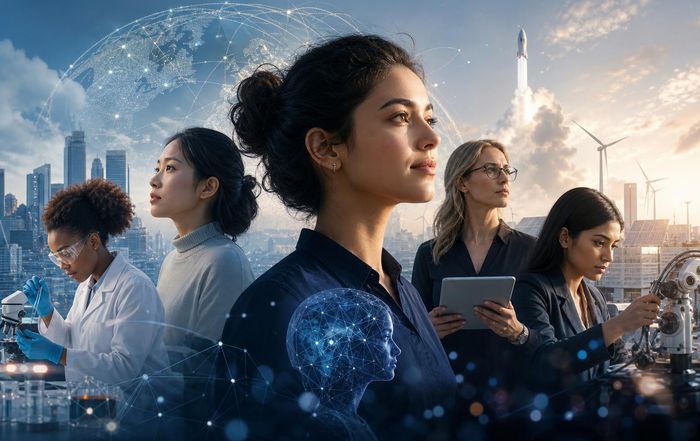
What is The Future for Women in Global Innovation?
A New Inflection Point for Women and Innovation
The conversation about women in global innovation has moved far beyond basic representation and diversity metrics; it now sits at the strategic core of how economies grow, how technologies are governed, and how societies choose to balance progress with responsibility. Around the world, boards, founders, policymakers and investors are beginning to recognize that the future of innovation will be decisively shaped by whether women are fully empowered as inventors, decision-makers and owners of intellectual property, rather than remaining primarily as end users or unseen contributors. For HerStage, whose amazing mission is to spotlight women's leadership, ambition and creativity across sectors and geographies, this moment represents both a validation of long-standing advocacy and an urgent call to define what inclusive innovation should look like over the next decade.
The global landscape is complex. According to ongoing analyses by organizations such as UN Women, the gender gap in STEM education, research leadership and venture funding remains stubborn in many regions, even as certain countries make rapid progress and new digital platforms open doors that did not exist a decade ago. At the same time, the macro forces shaping innovation-from artificial intelligence and climate technology to life sciences, fintech and the creative economy-are evolving at a speed that challenges traditional policy and corporate governance. In this fluid environment, women are not merely catching up; in many sectors they are designing new models of leadership, collaboration and purpose-driven entrepreneurship that are redefining what innovation success means. Readers can explore how these shifts intersect with personal growth and leadership journeys in the HerStage daily shifting sections on women and leadership, where individual stories illuminate broader structural change.
Global Trends Reshaping Women's Participation in Innovation
The future of women in global innovation cannot be understood without examining the broader economic and technological trends that frame their opportunities. Institutions such as the World Economic Forum have consistently highlighted that economies with higher female participation in advanced industries and leadership roles tend to demonstrate stronger resilience, more diversified innovation portfolios and more inclusive growth. Learn more about how innovation and gender equity intersect in global competitiveness through the latest analyses from the World Economic Forum. These macro insights are increasingly influencing national strategies in regions as diverse as North America, Europe, Asia and Africa, where governments are tying innovation funding to gender-inclusive outcomes.
In parallel, the rapid rise of digital platforms, remote work and cross-border collaboration has transformed the geography of innovation, enabling women in countries from Canada and Germany to South Africa and Brazil to access markets, mentors and capital beyond their immediate ecosystems. Research from organizations such as the International Labour Organization underscores how digitalization, when supported by appropriate policy and infrastructure, can broaden access to high-quality work and entrepreneurial opportunities for women, particularly in emerging economies. Readers can examine evolving work patterns and their impact on women's careers in the HerStage career and business independent thinking sections, where case studies reflect the lived experience behind these global trends.
Education as the Engine of Inclusive Innovation
Education remains the foundational driver of women's participation in innovation, and by 2026, the conversation has moved beyond simple enrollment numbers toward a deeper focus on quality, relevance and lifelong learning. Institutions such as UNESCO continue to emphasize that while girls and women have made significant gains in primary and secondary education globally, they remain underrepresented in advanced STEM fields, particularly in areas such as computer science, engineering and physics that serve as gateways to high-impact innovation roles. To understand how education systems are being redesigned for the innovation age, readers can explore global education trends through UNESCO's education resources.
However, the most promising developments are occurring where formal education intersects with flexible, technology-enabled learning opportunities that allow women to reskill and upskill throughout their careers. From online courses in data science and AI ethics offered by leading universities to specialized programs targeting female founders in fintech, healthtech and climate tech, the ecosystem for continuous learning is expanding rapidly. Platforms such as Coursera and edX have reported sustained growth in women learners across technical disciplines, especially in regions where traditional access to elite institutions has been limited. Those interested in aligning their own learning journey with innovation opportunities can find perspective in HerStage's education and self-improvement content, which explore both formal and informal pathways to expertise.
Leadership Models Redefining Innovation Cultures
As innovation becomes central to corporate and national strategy, leadership models are undergoing a quiet but profound transformation, and women are at the forefront of this shift. Traditional hierarchies and command-and-control cultures, which dominated industrial-era organizations, are ill-suited to the complex, cross-functional challenges posed by artificial intelligence, climate change, cybersecurity and global supply chain volatility. Emerging research from institutions such as Harvard Business School suggests that leadership styles emphasizing collaboration, empathy, stakeholder engagement and long-term thinking correlate strongly with innovation outcomes in uncertain environments. Learn more about evolving leadership models and their impact on performance through Harvard Business School's thought leadership.
Women leaders across technology, finance, health, education and the creative industries are increasingly recognized for pioneering these adaptive leadership approaches, often drawing on experiences of navigating bias and constraint to design more inclusive systems. From female chief technology officers in Singapore and Sweden to women-led climate funds in France and South Africa, these leaders are demonstrating that innovation cultures thrive when diverse voices are empowered to challenge assumptions and co-create solutions. For HerStage, documenting and amplifying these leadership narratives is central to its editorial mission, particularly within the leadership and world sections that track how women shape innovation agendas across continents.
Health, Wellbeing and the Sustainability of High-Performance Careers
The future of women in global innovation is inseparable from the question of health and wellbeing, as the demands of high-performance careers in fast-moving sectors can exact a significant physical and mental toll if not managed intentionally. Organizations such as the World Health Organization have highlighted the rising prevalence of stress, burnout and mental health challenges among professionals in knowledge-intensive industries, with women often bearing additional burdens due to caregiving responsibilities and social expectations. Learn more about the intersection of work, gender and mental health through the World Health Organization's mental health resources.
At the same time, women are not only navigating these pressures but also driving innovation in health and wellbeing solutions themselves, from digital therapeutics and personalized nutrition platforms to workplace wellbeing programs and community-based mental health initiatives. Female founders in countries such as the United States, the United Kingdom, India and Australia are building ventures that integrate evidence-based medicine with culturally sensitive approaches to care, often informed by their own experiences of navigating health systems that have historically under-researched women's conditions. HerStage addresses this dual dynamic-women as both consumers and creators of health innovation-through its health and lifestyle coverage, where wellbeing is framed as a strategic asset rather than a secondary concern.
Food, Sustainability and the Innovation of Everyday Life
Innovation is often associated with software, hardware and frontier science, yet some of the most consequential shifts for women globally are occurring in food systems, where technology, sustainability and culture converge. Organizations such as the Food and Agriculture Organization of the United Nations have repeatedly emphasized that women play critical roles across agricultural value chains, from smallholder farming in Africa and Asia to food entrepreneurship in North America and Europe, yet their access to land, finance, technology and market information remains constrained. To understand how global food systems are evolving and where women fit within them, readers can explore analyses from the Food and Agriculture Organization.
At the same time, urbanization, climate pressures and shifting consumer expectations are driving innovation in plant-based proteins, regenerative agriculture, food waste reduction and personalized nutrition, creating new opportunities for women as founders, scientists, supply chain experts and storytellers. In cities from Berlin to São Paulo and from Nairobi to Seoul, women are launching ventures that blend culinary creativity with sustainability, often using digital platforms to reach global audiences and influence consumer behavior. HerStage highlights these trends in its food and business sections, where the innovation of everyday life-what people eat, how it is produced and how it reflects their values-takes its place alongside more traditional technology narratives.
Beauty, Fashion and the Innovation of Identity
The beauty and fashion industries, long criticized for narrow standards and exclusionary practices, are undergoing a profound transformation driven in large part by women who are reimagining how identity, technology and commerce intersect. Market analyses by organizations such as McKinsey & Company show that digital-native brands led by women are leveraging data, community and sustainability to challenge incumbent players, while consumers increasingly reward authenticity, inclusivity and ethical supply chains. Learn more about how technology is reshaping fashion and beauty through insights from McKinsey's fashion and luxury practice.
Innovation in these sectors extends far beyond product design to encompass materials science, circular business models, AI-driven personalization and immersive digital experiences. From lab-grown textiles and biodegradable packaging to virtual try-on technologies and decentralized creator economies, women are participating not only as influencers and designers but as engineers, data scientists and venture-backed founders. For HerStage, which engages deeply with these themes through its beauty and fashion verticals, the future of innovation in beauty and fashion is inseparable from broader questions of representation, cultural power and economic agency, especially for women in regions historically underrepresented in global style narratives.
Technology, AI and the Governance of the Future
Perhaps the most strategically important arena for women in innovation is the governance of emerging technologies, particularly artificial intelligence, quantum computing, biotechnology and advanced cyber-physical systems. As governments, corporations and international bodies grapple with how to regulate and deploy these technologies responsibly, the presence-or absence-of women at the decision-making table will shape outcomes for decades. Organizations such as the OECD have emphasized that diversity in AI development teams improves not only fairness and bias mitigation but also the robustness and creativity of solutions. Learn more about inclusive AI and digital policy through the OECD's work on AI and the digital economy.
By 2026, women are increasingly visible as AI researchers, ethics officers, regulators, startup founders and civil society leaders, yet their representation remains uneven across regions and subfields. In countries such as Canada, the United Kingdom, Singapore and Sweden, targeted initiatives have begun to increase the number of women in advanced AI roles, while pan-African and pan-Asian networks are emerging to support female technologists and policy experts. HerStage covers these developments with a particular focus on how women's perspectives shape debates about algorithmic fairness, data governance, surveillance, labor displacement and the societal impacts of automation, recognizing that technical innovation without inclusive governance can deepen, rather than close, existing inequalities.
Capital, Ownership and the Power to Shape Outcomes
While visibility and participation are important, the future of women in global innovation ultimately hinges on questions of capital and ownership. Venture funding, private equity, sovereign wealth strategies and corporate R&D budgets determine which ideas scale, which technologies are commercialized and who benefits from intellectual property. Analyses from organizations such as PitchBook and Crunchbase have documented persistent disparities in the share of venture capital flowing to women-founded and mixed-gender founding teams, although certain ecosystems in Europe, North America and Asia are showing incremental improvement. Readers can explore evolving patterns in venture funding and founder diversity through PitchBook's private markets research.
At the same time, new funding models are emerging that may prove more hospitable to women innovators, including revenue-based financing, crowdfunding platforms, gender-lens investment funds and impact investing vehicles that explicitly prioritize social and environmental outcomes alongside financial returns. Institutions such as the International Finance Corporation have been active in promoting gender-smart investing, arguing that capital markets are leaving significant value on the table by underestimating women-led ventures. Learn more about gender-lens investing and its potential through the International Finance Corporation's resources on gender and investment. HerStage pays particular attention to these shifts in its business and guide content, offering readers practical insights into how women can navigate funding landscapes, negotiate ownership stakes and build long-term wealth through innovation.
Mindfulness, Purpose and the Human Side of Innovation
As innovation agendas accelerate, a countervailing movement is gaining strength among women leaders, founders and professionals who are determined to align their work with deeper values, purpose and personal wellbeing. This does not represent a retreat from ambition; rather, it reflects a more holistic understanding of success that balances achievement with meaning, relationships and inner resilience. Research from institutions such as Stanford University and Yale University on mindfulness, emotional intelligence and purpose-driven leadership is increasingly influencing executive education programs and corporate leadership development. Learn more about the science of wellbeing and performance through Yale's Center for Emotional Intelligence.
Women in innovation roles are often early adopters of these practices, integrating mindfulness, coaching, peer support and reflective decision-making into their professional journeys, both as a way to sustain high performance and as a means of leading teams more humanely. HerStage reflects this shift through its mindfulness and self-improvement coverage, where readers find not only productivity advice but also frameworks for navigating uncertainty, managing imposter syndrome and cultivating the inner stability required to drive change in volatile environments. In a world where technological acceleration can easily outpace human adaptation, this focus on the inner life of innovators may prove to be one of the most consequential developments of the coming decade.
A HerStage Perspective on the Road Ahead
Looking toward 2030 and beyond, the trajectory of women in global innovation will be shaped by choices made today in classrooms, boardrooms, laboratories, investment committees and policy forums. The evidence is increasingly clear: economies, companies and societies that invest in women's full participation in innovation reap dividends in creativity, resilience, social cohesion and long-term competitiveness. Global institutions such as the United Nations have integrated gender equality into the core of the Sustainable Development Goals, recognizing that progress on climate, health, education, poverty reduction and peace is inseparable from the empowerment of women and girls. Learn more about how gender equality underpins sustainable development through the United Nations' SDG resources.
For HerStage, the future of women in global innovation is not an abstract policy topic but a lived reality reflected in the stories, interviews, analyses and guides shared with its global readership every day. Whether profiling a biotech founder in Switzerland, a climate-tech investor in South Africa, a creative entrepreneur in Brazil or a public sector innovator in Japan, the platform is committed to highlighting the experience, expertise, authoritativeness and trustworthiness of women who are actively shaping the next era of progress. Readers here or RSS/ATOM/Email subscribing members who wish to stay engaged with these evolving narratives can explore the full range of coverage across HerStage's homepage, from world affairs and career strategy to glamour and lifestyle, recognizing that innovation is not confined to laboratories or code repositories but extends into every domain where women imagine, design and lead.
Ultimately, the future of women in global innovation will be determined not only by structural reforms and institutional commitments, essential though they are, but also by the everyday decisions of individuals: the student who chooses a challenging field, the manager who sponsors a high-potential colleague, the investor who backs a first-time founder, the policymaker who insists on inclusive processes, and the reader who chooses to stay informed and engaged. In amplifying these choices and the stories behind them, HerStage positions itself as both an observer and a catalyst, ensuring that as innovation reshapes the world, women are not merely present but powerful, not only participating but leading.
