
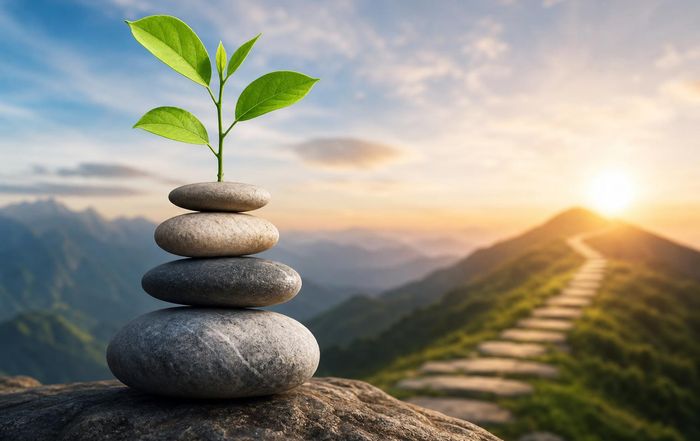
Creating a Sustainable Success Mindset in 2026
Redefining Success for a New Era
By 2026, the language of success has shifted decisively away from relentless hustle and short-term wins toward a more integrated, sustainable vision of achievement that respects human limits, planetary boundaries, and the need for psychological safety. On HerStage, this shift is not an abstract trend, but a lived reality for women and allies who are balancing leadership, ambition, caregiving, health, and identity in a world that is volatile, hyperconnected, and increasingly demanding. The sustainable success mindset emerging today is less about squeezing more productivity out of every hour and more about designing a life and career that can be sustained physically, mentally, emotionally, and ethically over decades, while still allowing for meaningful impact, financial security, and personal fulfillment.
This evolving mindset is shaped by powerful global forces: the acceleration of artificial intelligence and automation, the normalization of hybrid work, the mounting urgency of climate change, demographic shifts in the workforce, and a growing recognition of systemic inequities that have historically constrained women's advancement. Research from organizations such as McKinsey & Company and Deloitte underscores how women leaders in the United States, the United Kingdom, Germany, Canada, Australia, and beyond are both driving change and bearing disproportionate burdens of burnout and caregiving. As professionals seek to understand how to build a career and a life that will still feel viable in 2036, not just impressive in 2026, the idea of sustainable success becomes central, and HerStage positions itself as a platform where this conversation is grounded in real stories, practical insight, and a clear focus on women's lived experiences.
The Evolution from Hustle Culture to Sustainable Achievement
The early 2010s and 2020s were often defined by hustle culture, glorifying long hours, constant connectivity, and an almost moralized expectation of self-sacrifice in the name of ambition. Yet the pandemic years and their aftermath revealed the fragility of this model, as burnout rates climbed, mental health concerns surged, and many professionals, particularly women, reassessed what they were willing to trade for advancement. Studies from Harvard Business Review and World Health Organization highlighted how chronic stress, lack of boundaries, and poor work design were not merely individual problems but systemic risks to organizational performance and public health.
In response, the sustainable success mindset reframes ambition as a long-term endeavor that must coexist with health, relationships, and purpose. Rather than seeing rest, boundaries, and self-care as indulgences, this mindset treats them as strategic assets that preserve cognitive capacity, creativity, and emotional resilience. Leaders in Europe, Asia, North America, and beyond are starting to recognize that sustainable achievement demands a more nuanced understanding of productivity, one that includes recovery, reflection, and learning. On HerStage's leadership hub at herstage.com/leadership, this shift is explored through profiles, analysis, and guidance for women who want to lead without burning out or opting out, and who are determined to model a new paradigm of success for the next generation.
Women at the Center of the Sustainable Success Conversation
Women are not simply participants in this evolution; they are often the catalysts. Across sectors from technology and finance to healthcare and public policy, women leaders are challenging traditional definitions of success that prioritized visibility, constant availability, and linear career progression. Data from UN Women and the World Economic Forum shows that women, especially in countries such as Sweden, Norway, Singapore, and New Zealand, have been at the forefront of advocating for flexible work, inclusive leadership cultures, and policies that support caregiving and wellbeing, not as perks but as structural necessities.
This advocacy is deeply personal. Women still shoulder a disproportionate share of unpaid care work in most regions, including South Africa, Brazil, Malaysia, and Italy, which makes unsustainable work expectations more immediately untenable. At the same time, women's rising representation in executive roles and on boards in countries like France, the Netherlands, and the United Kingdom has created new opportunities to embed sustainable practices into corporate strategies. On HerStage's women-focused section at herstage.com/women, these dynamics are examined through the lens of lived experience, with an emphasis on how women can use their influence to redesign systems, not just cope more efficiently with flawed ones.
The Inner Architecture of a Sustainable Success Mindset
A sustainable success mindset is not purely a set of external practices; it is an internal architecture of beliefs, habits, and emotional skills that allow individuals to pursue ambitious goals without eroding their health or integrity. Psychologists and performance researchers at institutions such as Stanford University, University of Oxford, and MIT have increasingly emphasized the role of mindset, self-compassion, and psychological flexibility in long-term achievement. For women, whose careers often intersect with gender bias, caregiving responsibilities, and cultural expectations, cultivating this inner architecture can be particularly transformative.
At its core, this mindset integrates four pillars: clarity of values, realistic self-awareness, disciplined energy management, and adaptive learning. Clarity of values ensures that professional choices align with personal meaning rather than external validation alone, reducing the risk of climbing a ladder that leads to dissatisfaction. Realistic self-awareness balances ambition with an understanding of one's limits and needs, allowing for more strategic decisions about when to push and when to pause. Disciplined energy management treats physical and emotional energy as finite resources that must be renewed through sleep, nutrition, movement, and mental recovery, themes explored extensively in HerStage's health section at herstage.com/health. Adaptive learning, finally, embraces change and uncertainty as constants, encouraging continuous skill development and experimentation rather than rigid attachment to a single career path.
Self-Improvement as a Strategic, Not Cosmetic, Practice
In 2026, self-improvement has moved beyond the realm of superficial hacks and into a more strategic, research-informed practice. The sustainable success mindset reframes self-improvement as an ongoing process of aligning behavior with values, expanding capabilities, and strengthening resilience, rather than as a race to become a flawless version of oneself. On HerStage's self-development portal at herstage.com/self-improvement, self-improvement is presented as a tool for agency and autonomy, particularly for women navigating complex career and life transitions.
Experts from organizations like American Psychological Association and Mind in the United Kingdom emphasize that sustainable self-improvement is characterized by small, consistent changes rather than intense, short-lived efforts. This might involve building a habit of reflective journaling to track progress and clarify priorities, adopting evidence-based stress management techniques such as mindfulness or cognitive reframing, or committing to structured learning in areas like digital literacy, leadership, or financial planning. For women in Germany, Japan, South Korea, and beyond, where work cultures can be particularly demanding, this approach to self-improvement offers a way to grow without succumbing to perfectionism or chronic self-criticism, and it anchors growth in compassion rather than pressure.
Health as the Non-Negotiable Foundation of Long-Term Success
The sustainable success mindset treats health not as a secondary concern to be managed around work, but as the non-negotiable foundation upon which all meaningful, long-term achievement rests. Organizations such as the Mayo Clinic and Cleveland Clinic have long documented the connections between chronic stress, inadequate sleep, poor nutrition, and long-term risks such as cardiovascular disease, depression, and metabolic disorders. For ambitious professionals, ignoring these links is increasingly understood as a strategic error, not just a personal oversight, because compromised health ultimately constrains creativity, decision-making, and leadership capacity.
HerStage's audience, spanning North America, Europe, Asia, Africa, and South America, is acutely aware that health is shaped not only by personal choices but also by access, culture, and workplace norms. On herstage.com/food, discussions of nutrition intersect with cultural traditions and practical constraints faced by women managing busy careers and families. On herstage.com/lifestyle, the narrative emphasizes designing daily routines that support restorative sleep, movement, and mental decompression, even in dense urban environments like Singapore, London, or New York. Global health bodies such as the World Health Organization and Public Health England have increasingly urged employers to recognize their responsibility in creating conditions that support employee wellbeing, and women leaders are often among the most vocal advocates for such change.
Mindfulness, Emotional Regulation, and Cognitive Sustainability
Cognitive sustainability has become a defining concern in an era of constant digital stimulation, information overload, and algorithm-driven distraction. The sustainable success mindset recognizes that attention is a finite resource and that the quality of one's focus directly influences both performance and wellbeing. Practices such as mindfulness, contemplative breathing, and intentional technology boundaries are no longer niche wellness trends but are being integrated into corporate leadership programs and educational curricula across Europe, Asia, and North America. Institutions like UCLA Mindful Awareness Research Center and Oxford Mindfulness Foundation have demonstrated how regular mindfulness practice can improve emotional regulation, concentration, and resilience to stress.
HerStage's dedicated space for reflection at herstage.com/mindfulness explores how women in diverse cultural contexts are using mindfulness not only to cope with stress but to make clearer decisions, respond more thoughtfully to bias or conflict, and cultivate a more grounded sense of identity independent of external achievements. Emotional regulation, a related skill, allows leaders to navigate complex organizational dynamics without becoming overwhelmed or reactive, which is particularly vital for women who may face heightened scrutiny or stereotype-based expectations in leadership roles. By treating mental and emotional skills as trainable capacities rather than fixed traits, the sustainable success mindset opens the door for more inclusive and compassionate forms of high performance.
Leadership That Sustains People, Not Just Profits
Sustainable success is not only an individual pursuit; it is deeply collective. Leadership that sustains people, not just profits, is becoming a competitive advantage in markets from Switzerland and Denmark to South Africa and Brazil. Research from Gallup and Great Place to Work has consistently shown that organizations with high levels of employee engagement, psychological safety, and inclusive leadership outperform peers on innovation, retention, and customer satisfaction. Women leaders, often socialized to value collaboration and empathy, are uniquely positioned to champion these approaches, though they must also navigate the double bind of being expected to be both decisive and endlessly accommodating.
On herstage.com/business, HerStage examines how sustainable leadership practices are reshaping corporate cultures, from implementing flexible work policies and caregiver support to embedding diversity, equity, and inclusion into strategy rather than treating them as compliance exercises. Global frameworks such as the UN Global Compact and OECD guidelines on responsible business conduct provide a backdrop for organizations that want to align financial performance with social and environmental responsibility. Women in leadership roles in Canada, France, Singapore, and beyond are increasingly using these frameworks to argue that sustainability is not a public relations exercise but a core component of risk management and long-term value creation, and that the wellbeing of employees is inseparable from the health of the enterprise.
Career Design in an Era of Uncertainty and Automation
The accelerating impact of artificial intelligence, robotics, and digital platforms is transforming labor markets in ways that make linear, single-employer careers increasingly rare. A sustainable success mindset therefore demands a more flexible, design-oriented approach to careers, in which individuals periodically reassess their skills, values, and opportunities, and make intentional pivots rather than clinging to outdated trajectories. Organizations such as the World Economic Forum and OECD have mapped how demand for skills in areas such as data literacy, emotional intelligence, and complex problem-solving is rising across regions as varied as Japan, Thailand, Finland, and the United States, while routine tasks are increasingly automated.
HerStage's career-focused content at herstage.com/career encourages readers to think of their careers as evolving portfolios rather than rigid ladders, integrating full-time roles, side ventures, learning sabbaticals, and cross-sector transitions. Education, explored in depth at herstage.com/education, becomes a lifelong endeavor, supported by online platforms, micro-credentials, and executive programs at institutions such as INSEAD, London Business School, and University of Toronto. For women in regions where career breaks for caregiving are common, such as Italy, Spain, and South Korea, sustainable success involves planning for re-entry, upskilling, and negotiation strategies that recognize the value of non-linear experience, rather than viewing it as a liability.
Integrating Beauty, Fashion, and Personal Brand with Authenticity
While discussions of sustainable success often focus on productivity and leadership, HerStage recognizes that beauty, fashion, and personal presentation remain powerful dimensions of how women experience and express success across cultures. However, the sustainable success mindset challenges purely appearance-driven narratives, instead emphasizing authenticity, comfort, and alignment with values, including environmental and ethical considerations. The rise of sustainable fashion, documented by sources such as Business of Fashion and Ellen MacArthur Foundation, reflects a growing desire in markets from the Netherlands and Denmark to Australia and the United States to reconcile style with responsibility.
On herstage.com/fashion and herstage.com/beauty, HerStage explores how women are curating wardrobes and beauty routines that support confidence and professional presence without becoming financially or psychologically burdensome. This might involve investing in fewer, higher-quality pieces from brands committed to ethical supply chains, or adopting skincare and makeup routines that enhance wellbeing rather than masking exhaustion. The concept of glamour, treated thoughtfully at herstage.com/glamour, is reframed as an expression of inner vitality and personal story, rather than a rigid aesthetic standard. In this context, personal brand becomes less about image management and more about coherence between how one appears, how one leads, and what one stands for.
Global Context: Culture, Geography, and the Shape of Sustainable Success
Sustainable success does not look identical in every region, and HerStage, with its global readership spanning Europe, Asia, Africa, and the Americas, is acutely aware of how culture, policy, and economic conditions shape what is possible. In Nordic countries such as Sweden, Norway, Finland, and Denmark, strong social safety nets, parental leave policies, and gender equality initiatives create conditions that support more balanced approaches to work and life, though challenges remain. In rapidly developing economies such as China, Thailand, Malaysia, and South Africa, rising middle classes and digital connectivity are expanding opportunities for women, even as traditional gender norms and resource constraints can limit access to education, healthcare, and entrepreneurial capital.
In North America and Western Europe, debates about remote work, four-day workweeks, and mental health support reflect a broader reckoning with the costs of high-pressure professional cultures. Organizations like OECD, International Labour Organization, and World Bank provide comparative data on labor conditions, gender gaps, and social protections that inform these debates. On herstage.com/world, HerStage situates personal stories of women's careers and leadership within this global context, highlighting both common themes and region-specific nuances. For a reader in Canada, Brazil, or Singapore, understanding these differences is part of crafting a sustainable success strategy that is realistic, culturally attuned, and adaptable to future shifts.
Practical Pathways: Translating Mindset into Daily Practice
A sustainable success mindset becomes meaningful only when translated into daily decisions about time, energy, relationships, and commitments. While HerStage does not prescribe a single formula, it emphasizes a few practical pathways that consistently emerge from research and lived experience. First, intentional planning that includes not only work tasks but also rest, learning, and relationships helps prevent the constant crisis mode that undermines health and judgment. Second, boundary-setting, particularly around digital communication and availability, allows women to protect deep work time and personal life, even in demanding roles. Third, investing in supportive networks-mentors, peers, communities such as professional associations or women's leadership forums-provides buffers against isolation and burnout, a theme echoed in insights from LeanIn.Org and similar organizations.
HerStage's guides at herstage.com/guide offer structured frameworks for readers who want to design more sustainable routines, renegotiate work expectations, or prepare for career transitions. Lifestyle choices, from food and movement to leisure and creative expression, are treated not as afterthoughts but as integral components of resilience, explored through herstage.com/lifestyle and the main portal at herstage.com. In parallel, broader conversations about sustainable business practices and ethical leadership are informed by resources from United Nations, IPCC, and leading think tanks, encouraging readers to see their individual choices as part of a larger ecosystem of change.
HerStage as a Companion in the Journey Toward Sustainable Success
As the world moves deeper into the second half of the 2020s, the question is no longer whether the old models of success are failing, but what will replace them, and who will define the new standards. HerStage positions itself as a companion and catalyst in this transition, curating insight at the intersection of women's leadership, self-improvement, health, career, business, and global context. By bringing together perspectives from trusted institutions, experienced leaders, and emerging voices from across continents, the platform underscores that sustainable success is both an individual responsibility and a collective project.
For women in the United States balancing executive roles and caregiving, for entrepreneurs in Nigeria or Brazil building purpose-driven ventures, for students in Germany or Japan preparing for careers that do not yet fully exist, and for leaders in Canada, Singapore, or South Africa shaping organizational cultures, the sustainable success mindset offers a compass rather than a rigid map. It invites them to pursue excellence without erasing themselves, to build influence without sacrificing integrity, and to design lives that are not only impressive from the outside but genuinely livable from the inside. In this sense, sustainable success is not a compromise; it is a more ambitious, humane, and future-ready definition of what it means to thrive, and HerStage is committed to making that definition visible, practical, and attainable for women around the world.
