
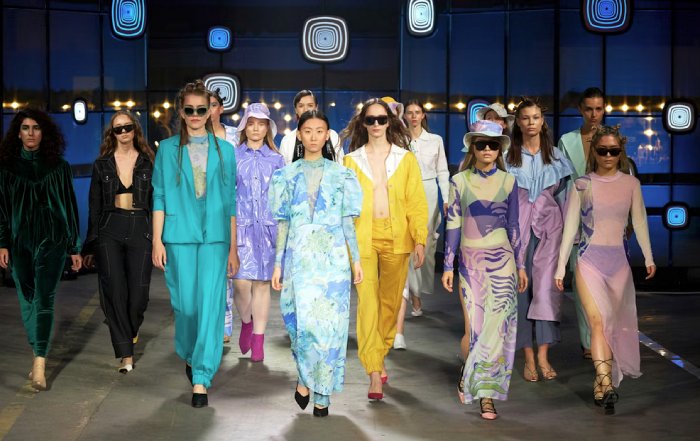
What Global Fashion Trends Reveal About Women in 2026
Fashion as a Real-Time Portrait of Women's Lives
In 2026, global fashion has become one of the most immediate and revealing portraits of women's lives, ambitions, and power, reflecting not only how women dress but how they work, lead, care, resist, and design their futures in a volatile and rapidly transforming world. The evolution of style charts a deeper shift in how women define identity, negotiate social expectations, and claim space in public, digital, and professional life. For HerStage, which is dedicated to women's leadership, lifestyle, and personal growth, fashion is not treated as a superficial diversion but as a strategic lens through which to understand changing dynamics of gender, culture, and business, and as a language that speaks directly to readers navigating careers, self-improvement, and self-expression across continents.
Unlike earlier eras when a handful of luxury houses and fashion capitals dictated the narrative from the top down, fashion in 2026 operates as a distributed and interactive ecosystem in which women as consumers, creators, founders, and activists shape the conversation as forcefully as established brands and designers. Global street style, digital platforms, resale marketplaces, and emerging labels have created a feedback loop in which women test ideas in public, challenge stereotypes, and reward authenticity in real time. On HerStage, this reality is threaded through coverage of lifestyle, leadership, and career, positioning fashion as a living archive of how women reconcile comfort with authority, heritage with innovation, and aesthetics with ethics in an era of climate anxiety, geopolitical tension, and technological acceleration.
The Power Shift: Women as Co-Creators and Market Architects
One of the most significant developments visible through fashion in 2026 is the consolidation of a power shift from brands to women as informed, vocal, and globally connected co-creators. Social platforms, resale ecosystems, and direct-to-consumer models have given women in North America, Europe, Asia, Africa, and South America unprecedented influence over design, pricing, storytelling, and corporate behavior. Platforms such as Instagram and TikTok function as real-time laboratories where women test silhouettes, debate trends, call out tokenism, and elevate niche designers, forcing even the most established houses to respond with greater transparency and agility.
At the same time, women-owned fashion businesses have expanded in both number and sophistication, particularly in the United States, United Kingdom, Germany, Canada, Australia, Singapore, and the Nordic countries, where digital tools, global logistics, and cross-border payment systems allow micro-brands to reach international audiences almost from launch. Many of these founders design from the lived reality of hybrid careers, caregiving responsibilities, and social pressure, producing collections that prioritize practicality, inclusive sizing, and cultural nuance alongside visual impact. Analyses from organizations such as the World Economic Forum, which tracks gender and entrepreneurship, show that women are increasingly leveraging fashion ventures as vehicles for economic independence and social impact. For HerStage, these entrepreneurial journeys sit naturally beside business and women's content, illustrating how style, revenue models, and leadership are converging as women become architects of the very markets that once merely sold to them.
Comfort, Authority, and the Post-Pandemic Workwear Order
The reconfiguration of work since the pandemic continues to transform women's wardrobes in 2026, particularly in the United States, Canada, the United Kingdom, Germany, France, the Netherlands, and rapidly digitizing economies in Asia-Pacific. Hybrid schedules, distributed teams, and normalized remote collaboration have eroded the old binary between "office wear" and "home wear," giving rise to a mature version of soft power dressing in which relaxed tailoring, elevated knitwear, and technical fabrics coexist with sharp lines and intentional color choices. Rather than relying on rigid suits and overtly masculine silhouettes to signal gravitas, women in leadership positions in finance, technology, law, and public policy are embracing fluid cuts, nuanced color palettes, and textural layering that communicate both competence and humanity.
Research from organizations such as McKinsey & Company and Deloitte on the future of work and women in leadership underscores a parallel shift in expectations around workplace culture, with women negotiating for flexibility, psychological safety, and purpose-driven environments while continuing to advance into senior roles. This evolving visual language of authority is reflected on HerStage through coverage of career and self-improvement, where the emphasis has moved away from strict dress codes and toward alignment between values, wellbeing, and appearance. Across boardrooms in Zurich, Stockholm, Singapore, and Seoul, the attire of women executives signals a broader redefinition of professionalism in which empathy, adaptability, and clarity of vision matter as much as traditional formality.
Sustainability and Ethics as Non-Negotiable Fashion Criteria
By 2026, sustainability and ethics have moved from aspirational talking points to core decision criteria for a growing share of women consumers, particularly in Scandinavia, Western Europe, Canada, Australia, Japan, South Korea, and increasingly in the United States and emerging Asian markets. Women are interrogating the environmental and social costs of their wardrobes with a level of sophistication that reflects the mainstreaming of climate science and supply-chain transparency tools. Reports by the United Nations Environment Programme and the Ellen MacArthur Foundation continue to highlight the fashion industry's outsized contribution to emissions, water use, and waste, and this data has become part of everyday conversation among informed consumers and professionals.
In response, many women are embracing circular fashion models, from peer-to-peer resale platforms and subscription-based clothing rental to repair services, upcycling, and carefully curated capsule wardrobes that prioritize longevity over volume. Vintage markets in Paris, Berlin, Amsterdam, Barcelona, Tokyo, and Bangkok have evolved into curated cultural hubs where sustainability, individuality, and heritage intersect. Business leaders seeking to understand this shift can turn to resources like Harvard Business Review, which increasingly explores how ethical expectations are reshaping corporate strategy, risk management, and investor relations. For HerStage readers, sustainability is woven into lifestyle, world, and guide content, recognizing that many women now see every purchase as a statement about community impact, climate responsibility, and intergenerational equity rather than simply personal taste.
Inclusivity, Body Diversity, and Representation as Strategy
Global fashion in 2026 reveals a gradual but meaningful recalibration of who is considered visible, aspirational, and worthy of being styled. In the United States, United Kingdom, Canada, Germany, and parts of Southern Europe, extended sizing, adaptive clothing, and more diverse casting in campaigns and runway presentations have moved from exception to expectation, even if implementation remains uneven. The pressure has largely come from women who refused to accept narrow standards of beauty and used social media, advocacy, and purchasing power to demand representation that reflects real bodies, ages, and abilities.
Health and policy institutions, including the World Health Organization and the OECD, have documented the mental and physical health consequences of unrealistic body ideals, adding empirical weight to calls for responsible imagery and marketing. This evidence-based approach aligns with HerStage's focus on the intersection of health, beauty, and mindfulness, where fashion is treated as a powerful influence on self-perception, stress, and long-term wellbeing. The increasing visibility of older women, women of color, and disabled women in campaigns across France, Italy, Spain, South Africa, Brazil, and Mexico signals not only moral progress but also a strategic recognition that relevance and revenue depend on speaking to the full spectrum of women's lived experience rather than a narrow, homogenized ideal.
Cultural Heritage, Identity, and the Global Wardrobe
A defining characteristic of women's fashion in 2026 is the confident blending of global influences with local heritage, resulting in wardrobes that are at once cosmopolitan and deeply rooted in culture. In West and East Africa, South Asia, the Middle East, Latin America, and Indigenous communities across North America and Oceania, women are incorporating traditional textiles, artisanal techniques, and ceremonial silhouettes into contemporary styling for work, education, and public life. This is not simply a cyclical trend but an assertion of identity and cultural continuity in the face of homogenizing global forces.
Cities are home to women designers who redefine luxury around craftsmanship, community, and narrative rather than mere logo recognition. International institutions like UNESCO and the World Trade Organization have increasingly recognized the economic and cultural significance of creative industries, and fashion is central to this recognition as a driver of exports, local employment, and soft power. On HerStage, features within fashion and education content explore how understanding the stories behind garments can deepen cross-cultural empathy, support more equitable global trade, and empower women artisans whose skills anchor local economies from Morocco to Vietnam and from Peru to Indonesia.
Digital Fashion, AI, and the New Grammar of Glamour
Technology has continued to reshape how women imagine, access, and perform fashion, with artificial intelligence, augmented reality, and virtual garments redefining glamour and self-presentation in 2026. In technologically advanced markets such as South Korea, Japan, Singapore, the United States, and the Nordic countries, women are increasingly comfortable using AI-powered styling tools, virtual try-on experiences, and personalized recommendation engines that analyze lifestyle, fit preferences, and ethical priorities. Industry-focused outlets like Vogue Business and The Business of Fashion document how major retailers and platforms integrate AI not only to reduce returns and inventory waste but also to offer more inclusive fit guidance and adaptive styling suggestions.
Parallel to this, digital-only fashion-garments that exist purely as augmented reality overlays or metaverse assets-has carved out a space for experimentation, particularly among younger women in Europe, Asia, and North America who use virtual looks to explore identities unconstrained by physical practicality, budget, or dress codes. This evolution intersects with HerStage's coverage of glamour and digital culture, where questions of authenticity, mental health, and digital citizenship are central. As AI becomes more deeply embedded in the fashion ecosystem, concerns around data privacy, algorithmic bias, and transparency are prompting women to scrutinize not only what they wear but also how recommendation systems shape their choices, echoing broader debates about trustworthy AI led by organizations like the OECD AI Policy Observatory and the European Commission.
Wellness, Mindfulness, and Functional Fashion as Daily Infrastructure
The global emphasis on wellness and mental health has transformed women's expectations of clothing, with functionality, comfort, and psychological ease now considered core attributes rather than optional perks. Athleisure has matured into an integrated category of performance-meets-luxury, as women in the United States, Canada, Australia, New Zealand, the United Kingdom, Germany, and the Netherlands seek garments that support movement, commute, caregiving, and social life without requiring outfit changes throughout the day. In Scandinavia, Japan, and South Korea, minimalist, technically advanced designs that prioritize breathability, thermoregulation, and durability have become synonymous with a balanced, mindful lifestyle.
Medical and research institutions such as the Mayo Clinic and Cleveland Clinic continue to highlight the importance of movement, posture, sleep, and stress management, and these insights filter into fashion through ergonomic footwear, pressure-distributing fabrics, and travel-friendly, crease-resistant materials. On HerStage, the convergence of health, food, lifestyle, and mindfulness emphasizes that clothing can either support or undermine the routines women build to protect their physical and mental resilience. As decision fatigue becomes a recognized workplace and domestic stressor, many women in high-pressure roles in New York, London, Frankfurt, Zurich, Singapore, and Hong Kong are turning to streamlined, modular wardrobes that simplify daily choices while still allowing for subtle expression of personality and cultural background.
Beauty, Image, and the Redefinition of Professional Standards
Fashion in 2026 cannot be separated from the parallel evolution of beauty standards, which increasingly prioritize health, subtle enhancement, and cultural authenticity over rigid conformity. In corporate hubs from London and Manchester to New York, Toronto, Berlin, Stockholm, Singapore, and Tokyo, many women professionals favor a polished but understated aesthetic that integrates skincare, lightweight makeup, and thoughtfully chosen garments to project competence and ease without theatricality. This shift reflects a broader move away from performative grooming expectations that disproportionately burden women and penalize natural hair, cultural dress, or visible aging.
Major beauty and skincare companies, regularly profiled by outlets like Allure and British Vogue, are investing in research-driven formulations, inclusive shade ranges, and hybrid products that bridge care and color. On HerStage, the connection between beauty, career, and self-improvement is framed around agency and confidence, encouraging women to define their own standards of professional appearance based on comfort, cultural integrity, and sector norms rather than inherited rules that often encode bias. As diversity, equity, and inclusion initiatives mature in leading companies across the United States, United Kingdom, Germany, Switzerland, Singapore, and South Africa, dress and grooming policies are slowly being rewritten to allow women to bring more of their authentic selves into spaces of power.
Education, Financial Power, and Strategic Wardrobe Building
The steady expansion of women's access to education and financial resources worldwide is reshaping how fashion is planned, purchased, and evaluated. Across Europe, North America, and increasingly in Asia, Africa, and South America, higher levels of female education, documented by the World Bank and UN Women, correlate with more analytical consumption patterns in which women consider cost-per-wear, resale value, maintenance demands, and brand ethics alongside aesthetics. Wardrobes are increasingly treated as strategic assets that support personal branding, networking, public speaking, and cross-cultural engagement, particularly for women in leadership pipelines or entrepreneurial ecosystems.
For many professionals and students in cities like Boston, Chicago, London, Paris, Frankfurt, Amsterdam, Zurich, Singapore, Seoul, and Tokyo, fashion functions as a nuanced tool for navigating social mobility, signaling credibility in male-dominated sectors, and building confidence when stepping into unfamiliar rooms. On HerStage, guides that integrate guide, business, and women advancement emphasize that understanding dress codes, sector-specific norms, and regional expectations is a form of soft power that can ease entry into global networks. As women in Germany, Switzerland, the United States, Singapore, Japan, and South Korea assume more visible roles in finance, technology, diplomacy, and climate negotiations, their wardrobe choices become part of a broader narrative of female authority, signaling preparation, cultural literacy, and strategic intent to audiences around the world.
What Fashion in 2026 Signals About Women's Futures
Taken together, global fashion trends in 2026 portray women who are increasingly self-directed, globally literate, and values-driven, using clothing, beauty, and digital aesthetics not as disguises but as languages through which to articulate identity, allegiance, and aspiration. From climate-conscious fabrics and inclusive sizing to AI-enabled personalization and culturally rooted design, each shift in the fashion landscape reflects a deeper negotiation of power, belonging, and possibility. Women are insisting that the industry respect their intelligence, time, bodies, cultures, and data, and they are rewarding brands, leaders, and platforms that respond with transparency, creativity, and integrity.
For HerStage, fashion is interwoven with every dimension of its mission, connecting lifestyle, leadership, mindfulness, and career in ways that resonate with readers from the United States and United Kingdom to Germany, France, Italy, Spain, the Netherlands, Switzerland, China, Sweden, Norway, Denmark, Singapore, South Korea, Japan, Thailand, Finland, South Africa, Brazil, Malaysia, New Zealand, and beyond. In a period marked by economic uncertainty, climate disruption, demographic shifts, and rapid technological change, the way women dress offers an immediate and visible indicator of how they are adapting, resisting, leading, and caring for themselves and others.
The future of fashion, like the future of women's lives, will be defined by complexity and hybridity: digital and physical, local and global, pragmatic and aspirational, individual and collective. Yet the underlying trajectory is increasingly clear. Women are moving from being subjects of fashion to being its authors, editors, investors, and regulators, insisting that what they wear must be coherent with who they are, the communities they belong to, and the world they aim to build. For businesses, policymakers, educators, and cultural institutions willing to listen closely, global fashion trends are not a distraction but a sophisticated data source, offering nuanced insight into women's evolving priorities and, in turn, a roadmap for building more responsive, inclusive, and resilient societies.
