
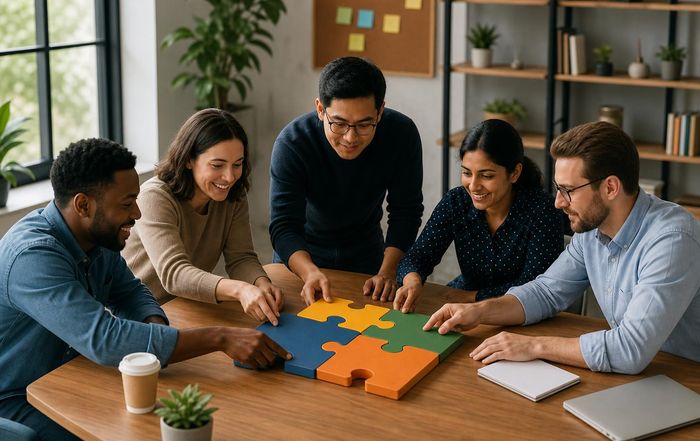
How to Strengthen Workplace Collaboration!
Collaboration as a Strategic Advantage
Workplace collaboration has moved from being a soft aspiration to a decisive competitive advantage, especially for organizations that recognize the central role of women's leadership and inclusive cultures. As hybrid work models mature across North America, Europe, Asia and beyond, leaders are discovering that collaboration is no longer defined by shared office space, but by shared purpose, psychological safety and disciplined communication. For the loving smart and active folks on HerStage, which brings together ambitious women and allies focused on leadership, self-improvement, health, career and lifestyle, the question is no longer whether collaboration matters, but how to architect it deliberately so that it fuels innovation, resilience and sustainable performance.
Leading institutions such as Harvard Business Review and McKinsey & Company have consistently highlighted that high-performing, diverse teams outperform homogeneous groups in problem-solving and creativity, particularly when they operate in environments where collaboration is intentionally designed rather than left to chance. Readers who follow the evolving research on team dynamics can explore how cross-functional teams drive innovation and learn more about building effective teams and collaboration. Yet translating these insights into daily practice inside organizations of different sizes and cultures, from startups in Singapore to multinationals in Germany and Brazil, requires a nuanced understanding of human behavior, technology, leadership and organizational design.
This article examines how leaders and professionals can strengthen workplace collaboration in 2026, drawing on global trends, evidence-based practices and the lived reality of women who are often both collaboration catalysts and culture carriers in their organizations. It situates collaboration not as a single initiative, but as an ecosystem that connects leadership, personal development, health, learning, and inclusive workplace design-core themes at the heart of HerStage.
The New Context: Hybrid, Distributed and Cross-Cultural
The workplace of 2026 is irreversibly hybrid and distributed, with teams spread across time zones from New York to London, Tokyo, Sydney and Cape Town, and with collaboration occurring as much on digital platforms as in physical meeting rooms. The shift accelerated by the pandemic years has now stabilized into a new normal where employees negotiate flexible work arrangements, and organizations balance productivity, well-being and culture-building in complex ways. To understand the foundations of this new environment, leaders can review resources on future of work and hybrid collaboration that outline how digital tools and evolving employee expectations are reshaping collaboration norms.
In this environment, collaboration is no longer synonymous with constant availability or endless meetings. Instead, high-performing organizations are distinguishing between synchronous and asynchronous collaboration, enabling deep work, and designing workflows that respect different time zones, caregiving responsibilities and energy cycles. Women leaders, who often shoulder disproportionate caregiving responsibilities in many countries, from Italy and Spain to South Africa and Malaysia, are at the forefront of advocating for collaboration models that are both high-performing and humane. On HerStage, readers who wish to explore how these changes intersect with women's roles in society can delve into broader narratives about women's evolving leadership and influence.
Cross-cultural collaboration is also now a daily reality rather than an occasional challenge. Teams routinely include members from Germany, China, India, Canada, France and Brazil, each bringing different communication styles, conflict norms and expectations about hierarchy. The Hofstede Insights framework, which examines cultural dimensions such as power distance and individualism, offers a useful lens for those who want to understand cross-cultural collaboration dynamics. Yet the most effective global leaders go beyond frameworks to cultivate curiosity, humility and a genuine interest in learning from colleagues whose backgrounds differ from their own, turning cultural diversity into a source of creativity rather than friction.
Leadership as the Engine of Collaborative Culture
Sustainable collaboration begins with leadership that is both competent and deeply human. In 2026, organizations are increasingly aware that leaders who micromanage, hoard information or reward individual heroics over collective achievement undermine collaboration, even when they invest heavily in technology. Conversely, leaders who model transparency, empathy and shared accountability create the psychological conditions in which collaboration flourishes organically.
Research from MIT Sloan Management Review has emphasized that digital collaboration tools only create value when paired with strong leadership behaviors and norms, and those interested can explore leadership practices that enable digital collaboration. For the HerStage audience, many of whom are aspiring or established women leaders, this means embracing a leadership style that blends clarity with compassion, setting high expectations while also normalizing vulnerability and learning from failure. Readers seeking to deepen their leadership journey can find more perspectives on inclusive and impactful leadership tailored to women navigating complex organizational environments.
In practice, collaborative leadership in 2026 involves several distinct behaviors. Leaders articulate a compelling shared purpose, linking team goals to broader organizational and societal impact, which is particularly important for younger professionals in Europe, Asia and North America who seek meaning in their work. They make decision-making processes visible, explaining not only what decisions were made, but why, thereby reducing confusion and building trust. They invite diverse perspectives early in problem-solving, especially from voices that are often marginalized, such as women in male-dominated sectors or colleagues from underrepresented regions. Crucially, they also design rituals-such as regular reflection sessions or cross-team showcases-that celebrate collaboration and learning rather than only individual performance metrics.
Building the Foundations: Psychological Safety and Trust
No amount of technology or process design can compensate for the absence of psychological safety. The concept, popularized by Dr. Amy Edmondson of Harvard Business School, refers to a shared belief that a team is safe for interpersonal risk-taking, meaning that people can ask questions, admit mistakes and challenge ideas without fear of humiliation or retaliation. Those who wish to explore the underlying research can review the work on psychological safety and learning in organizations, which has become central to modern management thinking.
For women and other underrepresented groups, psychological safety is particularly critical, as they may already face stereotype threat, bias or exclusion in many work environments across Asia, Africa, Europe and the Americas. Organizations that take collaboration seriously are investing in manager training to recognize microaggressions, interrupt bias in meetings and performance reviews, and foster inclusive dialogue. On HerStage, readers can explore related conversations on self-improvement and personal resilience, which are essential for individuals navigating imperfect workplaces while still advocating for positive change.
Trust is the currency of collaboration, and in 2026, trust must be built across physical distance, cultural difference and digital interfaces. High-trust teams exhibit consistent behaviors: they share information openly, honor commitments, give and receive feedback constructively, and assume positive intent while still holding each other accountable. Studies shared by organizations such as Gallup have shown that teams with high trust and engagement are more productive and less likely to experience burnout, and those interested can learn more about employee engagement and performance. Leaders who wish to strengthen collaboration must therefore treat trust-building as an ongoing discipline rather than a one-time initiative, embedding it into onboarding, team norms and daily interactions.
Designing Collaborative Processes and Rituals
While culture and leadership provide the foundation, effective collaboration also depends on well-designed processes and rituals that align people's efforts and reduce friction. Without clear structures, teams can become overwhelmed by meetings, duplicated work and misaligned priorities, particularly in large organizations spanning the United States, United Kingdom, Japan, Australia and South Africa. Thoughtful design starts with clarity: teams need explicit agreements about how decisions are made, how information is shared, and how conflicts are resolved.
Organizations inspired by agile methodologies often adopt lightweight frameworks that define roles, responsibilities and cadences without becoming overly bureaucratic. Resources such as the Scrum Alliance offer insights into agile practices that support collaboration, which many non-technical teams now adapt for marketing, operations and cross-functional projects. At HerStage, readers can complement these frameworks with practical lifestyle and productivity approaches that support sustainable collaboration, such as those discussed in the platform's lifestyle and work-life integration coverage.
Rituals are equally important. High-performing teams in 2026 often maintain a mix of short daily or weekly check-ins, deeper monthly strategy sessions and periodic retrospectives where they examine what is working and what needs to change. These rituals are especially valuable in hybrid environments, where informal hallway conversations are rare and intentional connection becomes critical. By using structured agendas, rotating facilitation and clear follow-up actions, teams can ensure that meetings are spaces of genuine collaboration rather than passive status updates, while also creating space for quieter voices to contribute meaningfully.
Leveraging Technology Without Losing Humanity
Digital collaboration platforms have become the backbone of modern work, but their proliferation has also introduced new challenges, from digital fatigue to information overload. Tools such as Microsoft Teams, Slack, Zoom and project management systems like Asana or Trello are now standard in organizations across Canada, Netherlands, Singapore, Denmark and New Zealand, enabling real-time communication and shared visibility into work. However, as analysts at Gartner have noted, technology alone does not guarantee effective collaboration; organizations must design digital workplaces with intention to avoid fragmentation and burnout.
In 2026, the most successful organizations treat collaboration technology as an enabler of human connection rather than a substitute for it. They define clear norms for communication channels, distinguishing between urgent and non-urgent messages, and encouraging asynchronous updates to respect time zones and deep work. They also invest in training employees to use tools effectively, recognizing that digital literacy is now a core professional competency in every sector, from finance and healthcare to education and creative industries. Readers interested in the intersection of technology, health and performance can explore how digital habits affect energy and well-being through HerStage's focus on health and mental resilience.
At the same time, organizations are increasingly attentive to the human cost of constant connectivity. Research from institutions such as Stanford University has highlighted the phenomenon of "Zoom fatigue," prompting leaders to rethink video meeting practices. In response, many teams are experimenting with meeting-free days, audio-only calls, and asynchronous video updates to reduce cognitive load while preserving connection. This balance between efficiency and humanity is particularly important for women, who may juggle professional responsibilities with caregiving and community roles, and who benefit from collaboration models that respect boundaries and support sustainable performance.
The Role of Well-Being, Food and Health in Collaboration
Strong collaboration is not only a matter of communication and process; it is also deeply intertwined with physical and mental health. In 2026, organizations across Europe, Asia-Pacific, North America and Africa are acknowledging that burnout, poor nutrition and chronic stress erode cognitive capacity, emotional regulation and empathy, all of which are essential for effective teamwork. The World Health Organization has underscored the impact of workplace stress on global health, and readers can explore guidance on mental health at work to better understand this connection.
Nutrition and food culture, often overlooked in business discussions, play a subtle yet significant role in collaboration. Shared meals-whether in office cafeterias in Zurich, team lunches in Toronto, or virtual cooking sessions connecting colleagues in Bangkok, Berlin and São Paulo-create informal spaces where trust and rapport can deepen. In many organizations, employee resource groups led by women are introducing wellness-focused initiatives that combine healthy eating with social connection, recognizing that the simple act of breaking bread together can soften hierarchies and open channels of communication. For readers interested in how food, culture and performance intersect, HerStage offers perspectives through its focus on food, nourishment and lifestyle.
Mental health support is equally central. Progressive employers in Sweden, Norway, Japan and the United States are investing in counseling services, stress management programs and flexible work policies that acknowledge the realities of caregiving, chronic illness and life transitions. Organizations that normalize conversations about mental health and encourage employees to set boundaries contribute to an environment where people feel safe to collaborate, ask for help and admit when they are overloaded. This alignment between well-being and collaboration reinforces HerStage's holistic approach, which integrates professional ambition with health, self-care and personal growth.
Learning, Education and Continuous Skill-Building
Collaboration in 2026 is also a learning challenge. As industries are reshaped by artificial intelligence, automation and climate transition, teams must continuously acquire new skills and adapt to emerging tools and business models. Collaborative learning-where colleagues teach one another, share knowledge openly and experiment together-has become a core capability in organizations from South Korea and China to France and the United Kingdom. Those who wish to explore the shifting landscape of skills and education can review global analyses on future skills and lifelong learning from international organizations.
Women professionals, who often navigate non-linear career paths and sector transitions, particularly benefit from collaborative learning environments where they can access mentors, sponsors and peer networks. Communities like HerStage contribute to this ecosystem by curating content that bridges formal education and lived experience, enabling readers to explore education, learning strategies and personal development in ways that align with their aspirations and constraints. Inside organizations, leaders can strengthen collaboration by recognizing and rewarding knowledge-sharing behaviors, creating cross-functional learning circles, and providing time for experimentation and skill-building.
In addition, the rapid rise of AI in the workplace has introduced a new frontier of collaboration-human-AI teaming. Professionals are learning how to work alongside intelligent systems that can analyze data, generate content and automate routine tasks, freeing humans to focus on higher-order collaboration, creativity and relationship-building. Resources from institutions such as The Alan Turing Institute offer insights into responsible AI and human collaboration, underscoring the importance of ethical design and inclusive governance. For women in technology, design, policy and business, this evolving landscape presents both opportunities and risks, making it essential to stay informed and actively shape how AI augments collaborative work.
Inclusion, Diversity and the Power of Women's Leadership
Diversity without inclusion does not lead to effective collaboration; in some cases, it can even heighten conflict if not accompanied by equitable structures and inclusive practices. In 2026, organizations across Global markets are under increasing scrutiny from employees, regulators and investors to demonstrate progress on gender equity, racial justice and broader diversity goals. Reports from entities like UN Women detail the ongoing gaps in representation and pay, and those interested can examine current data on gender equality in the workplace. Effective collaboration strategies must therefore address structural inequities and ensure that all voices are genuinely heard and valued.
Women leaders, particularly those from underrepresented backgrounds, bring critical perspectives to collaboration design. They often champion inclusive meeting practices, flexible work policies and empathetic performance management, recognizing that collaboration cannot thrive in environments where some colleagues feel unsafe or invisible. Platforms such as HerStage amplify these leadership stories, offering readers deeper insights into career progression, sponsorship and navigating corporate cultures while maintaining authenticity and integrity. By highlighting role models from Canada, India, Nigeria, Switzerland and beyond, HerStage underscores that collaborative excellence is not confined to one geography or industry.
Inclusion also extends to how organizations handle conflict. Healthy collaboration does not eliminate disagreement; rather, it creates conditions where differences can be surfaced, examined and resolved constructively. Training in inclusive communication, bias awareness and conflict resolution, supported by research from bodies such as the Chartered Institute of Personnel and Development (CIPD), helps leaders develop people management practices that support fairness and inclusion. When employees see that conflicts are handled transparently and respectfully, their trust in the collaborative system strengthens, encouraging more open contribution and innovation.
Mindfulness, Presence and the Human Side of Work
Amid constant digital stimulation and accelerating change, the capacity for presence has become a differentiator in collaborative work. Mindfulness practices-once considered niche-are now integrated into leadership development programs and employee wellness offerings in organizations across Finland, Thailand, the Netherlands and Australia. Research shared by institutions like UCLA Mindful Awareness Research Center illustrates how mindfulness can improve attention, emotional regulation and interpersonal connection, all of which are essential for deep collaboration.
For the HerStage audience, mindfulness is not a retreat from ambition but a foundation for sustainable influence and creativity. By cultivating the ability to listen fully, regulate emotional responses and remain grounded under pressure, women leaders enhance their capacity to navigate complex stakeholder dynamics and facilitate high-stakes conversations. Readers interested in integrating these practices into their daily lives and teams can explore HerStage's coverage of mindfulness, mental clarity and inner resilience, which connects personal practices to professional impact.
In collaborative settings, mindfulness translates into concrete behaviors: pausing before reacting in tense discussions, creating space for quieter colleagues to speak, noticing non-verbal cues in virtual meetings, and recognizing when fatigue or stress is driving unproductive conflict. Teams that normalize these practices, whether through brief centering exercises at the start of meetings or dedicated reflection time after major projects, often report higher levels of trust, creativity and satisfaction, reinforcing the link between inner work and outer collaboration.
Fashion, Presence and the Subtle Signals of Professional Identity
While collaboration is primarily about communication, trust and shared purpose, the way professionals present themselves-through fashion, grooming and visual identity-also shapes perceptions and dynamics, particularly in cross-cultural contexts. In 2026, as hybrid work persists, employees navigate a spectrum from home-based attire to in-person professional dress codes in cities like Paris, Milan, New York and Tokyo. For women, these choices are often laden with expectations and biases, making it important to approach them strategically rather than superficially.
Professional presence, including attire, can influence how contributions are received in collaborative settings, especially in industries where traditional norms remain strong. At the same time, younger generations are challenging rigid dress codes and advocating for authenticity and cultural expression. HerStage explores this evolving terrain through its focus on fashion, identity and professional confidence, recognizing that what women wear is never just about aesthetics, but also about power, comfort and self-definition.
Organizations that genuinely value collaboration are beginning to recognize and respect diverse expressions of professional identity, moving away from narrow standards that historically marginalized women and people from different cultural backgrounds. By allowing greater flexibility while maintaining clarity about context-appropriate dress for certain client or stakeholder interactions, they send a signal that collaboration is about substance rather than conformity, creating space for individuals to bring more of their authentic selves to the collective table.
From Insight to Action: A Collaborative Future!
Strengthening workplace collaboration in 2026 requires an integrated approach that spans leadership behavior, organizational design, technology, well-being, learning, inclusion and personal presence. For the global community connected through HerStage, this challenge is also an invitation: to shape workplaces where women's voices are not only included but central, where collaboration is both high-performing and humane, and where professional success aligns with health, purpose and integrity.
Organizations that treat collaboration as a strategic discipline rather than a vague aspiration are already seeing the benefits in innovation, employee engagement and resilience. They invest in leadership development that emphasizes empathy and clarity, design processes that reduce friction and amplify diverse contributions, and adopt technologies thoughtfully, always with an eye on human connection and sustainability. They recognize that collaboration does not mean constant consensus, but rather the capacity to navigate differences productively in pursuit of shared goals that matter.
For individual professionals, especially women navigating complex careers across North America, Europe, Asia-Pacific, Africa and South America, the path forward involves both inner and outer work. It means cultivating self-awareness, communication skills and resilience, while also advocating for structures and cultures that enable equitable collaboration. HerStage stands as a key online partner in this journey, offering daily resources across business and strategy, world trends and global context, beauty and self-expression, glamour and public presence, and broader guidance for living and leading with intention, as reflected in its overarching guides and features.
As organizations and individuals look toward the next decade, the most successful will be those who understand that collaboration is not a static skill but a living practice-one that evolves with technology, culture and human aspiration. By committing to continuous learning, inclusive leadership and compassionate performance, today's leaders and teams can build workplaces where collaboration is not only efficient, but also deeply fulfilling, and where the collective achievements of diverse, empowered women and their allies redefine what success looks like on the global stage.
