
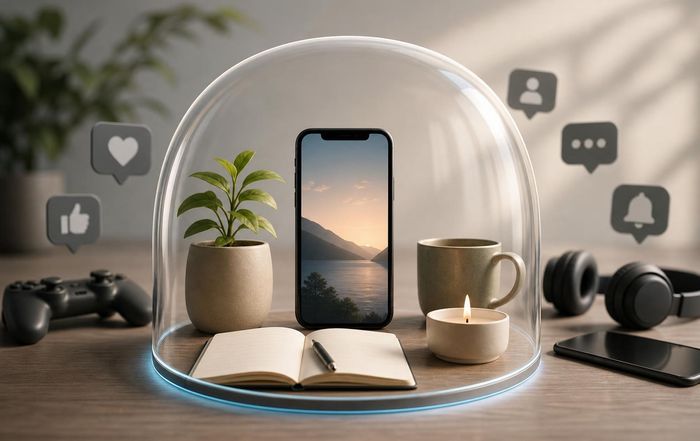
Creating Healthy Digital Boundaries: How Women Leaders Reclaim Time, Focus, and Well-Being?
Well then, the question facing ambitious women around the world is no longer whether they can keep up with the pace of digital life, but whether they can afford not to redefine their relationship with it. The always-on culture that once seemed to promise limitless opportunity now threatens focus, mental health, and the quality of leadership itself. For the global audience of HerStage, whose readers span from early-career professionals to C-suite executives across North America, Europe, Asia, Africa, and South America, creating healthy digital boundaries has become a strategic capability rather than a lifestyle preference, shaping not only personal well-being but also long-term career trajectories, leadership impact, and the sustainability of success.
Why Digital Boundaries Are Now a Leadership Imperative
The acceleration of hybrid and remote work since the early 2020s has blurred the line between professional and personal time in unprecedented ways. Tools like Microsoft Teams, Slack, and Zoom have enabled flexible work across time zones, yet they have also created subtle expectations of instant responsiveness that disproportionately affect women, who are often managing complex roles at work and at home. Research from organizations such as McKinsey & Company and Deloitte has repeatedly highlighted how women, especially women of color, carry a heavier load of "invisible work," both emotional and administrative, within teams and families. When that invisible work migrates into the digital space-constant messaging, emotional support in chats, late-night emails-the cognitive tax intensifies.
Executives and managers who understand the stakes increasingly recognize that digital boundaries are not a sign of disengagement but a marker of emotional intelligence and strategic clarity. By defining when and how they are reachable, women leaders send a powerful message about priorities, focus, and respect for human limits. This is particularly relevant to readers exploring leadership insights on HerStage through sections such as Leadership and Career, where the emphasis is consistently on sustainable, high-impact performance rather than short-term productivity sprints that lead to burnout.
Globally, regulatory shifts have reinforced this conversation. Several European countries have introduced or strengthened "right to disconnect" policies, and organizations worldwide are experimenting with digital well-being frameworks. Readers can explore how these trends intersect with broader workplace transformations through resources like the World Economic Forum, which regularly publishes analysis on the future of work and digitalization at weforum.org. The message is clear: in 2026, healthy digital boundaries are no longer a soft skill; they are a core leadership competency.
The Hidden Costs of Constant Connectivity for Women
The psychological and physiological impact of unbounded digital engagement is now better understood than ever. Continuous partial attention, a term popularized in the early 2000s, has become the default cognitive state for many professionals, with notifications, messages, and feeds fragmenting focus throughout the day. Reputable institutions such as Harvard Medical School have documented the relationship between chronic stress, sleep disruption, and screen exposure, and their public resources at health.harvard.edu explain how digital overload can contribute to anxiety, mood disturbances, and impaired decision-making.
Women leaders often experience these effects through a gendered lens. They may feel pressure to respond more quickly to demonstrate reliability, to be more available to support colleagues, or to manage both professional messages and family logistics through the same devices. This creates a mental environment where no space feels fully off-duty. The result is a steady erosion of deep work capacity, creativity, and emotional resilience, all of which are essential to effective leadership.
For readers focused on health and well-being, the intersection of digital life and mental health is a recurring theme on HerStage, particularly within Health and Mindfulness. Global health authorities such as the World Health Organization have increasingly recognized burnout as an occupational phenomenon, and their guidance at who.int underscores the role of workload, lack of control, and blurred boundaries. When work, social media, and personal communication converge on a single screen, the brain rarely experiences true recovery time.
There is also a social dimension. Platforms like Instagram, TikTok, and LinkedIn create ambient expectations of constant visibility and personal branding. For women building careers in competitive industries across the United States, the United Kingdom, Germany, Canada, Australia, and beyond, the pressure to maintain an online presence can become a second, unpaid job. Understanding how to set boundaries around self-presentation, content consumption, and engagement is therefore not merely about comfort; it is about protecting time and mental energy for higher-value activities such as learning, strategic thinking, and authentic relationship building.
Redefining Success: From Availability to Intentional Presence
One of the most profound shifts of the mid-2020s is a redefinition of what professional commitment looks like. Historically, responsiveness has been conflated with dedication, particularly in high-pressure sectors such as finance, technology, consulting, and media. However, leading organizations and thought leaders are reframing the narrative, emphasizing outcomes over online presence. Publications like the Harvard Business Review, accessible at hbr.org, have documented how deep work and uninterrupted concentration correlate with innovation and long-term performance.
For women in leadership roles, this shift opens space to model a healthier standard: success as intentional presence rather than perpetual availability. Instead of replying to every message within minutes, leaders can communicate clear response windows, prioritize high-impact conversations, and design their days around blocks of focused work. This approach not only improves personal productivity but also gives teams permission to do the same, creating a culture where thoughtful work is valued over reactive busyness.
On HerStage, articles in the Business and Women sections frequently highlight women who have built influential careers by aligning their time with their values. These leaders often describe a turning point when they stopped equating busyness with importance and began treating their attention as a finite strategic asset. Their stories align with broader insights from organizations like Stanford Graduate School of Business, where research shared at gsb.stanford.edu explores how high-performing leaders protect their cognitive bandwidth.
This redefinition of success also intersects with personal life. For many women, particularly those balancing caregiving responsibilities, digital boundaries are about being fully present with children, partners, friends, or even with themselves. Choosing to put the phone away during dinner, to resist checking email in bed, or to limit social media during weekends becomes a deliberate act of self-respect and relational investment. In a culture that constantly invites distraction, presence becomes a rare and powerful form of leadership-at home and at work.
Practical Strategies for Building Healthy Digital Boundaries
Translating the concept of digital boundaries into daily practice requires both self-knowledge and experimentation. There is no single template that fits a senior executive in London, an entrepreneur in Lagos, a software engineer in Seoul, and a graduate student in São Paulo equally well. Yet certain principles recur across geographies and industries, and they can be adapted to individual circumstances.
A foundational step is to clarify personal priorities and energy patterns. Women who engage with self-development content on HerStage, particularly via Self-Improvement and Guide, often begin by mapping when they do their best thinking, when they feel most drained, and which digital interactions genuinely contribute to their goals. With this insight, they can segment their days into focused work blocks, communication windows, and recovery periods, using device settings to support those intentions rather than undermine them.
Modern operating systems on smartphones and laptops now offer increasingly sophisticated focus modes, app limits, and notification controls. Technology companies like Apple and Google publish guidance on digital well-being tools at apple.com and wellbeing.google, helping users configure devices so that only essential alerts break through during key hours. Leaders can, for example, silence non-urgent apps during mornings reserved for strategic work, while allowing calls from family or critical team members.
Another strategy involves setting explicit communication norms with colleagues and clients. Rather than leaving expectations unspoken, women leaders can clarify their typical response times, preferred channels for urgent matters, and off-hours availability. This might mean stating in email signatures that messages received after a certain hour will be addressed the next business day, or encouraging teams to use scheduled send features so that late-night work does not become an implicit demand on others. Professional associations and workplace well-being advocates, such as those featured by Chartered Institute of Personnel and Development (CIPD) at cipd.org, increasingly recommend these practices as part of healthy organizational cultures.
Finally, many women find it helpful to create device-free rituals that anchor their days. Morning routines that begin without screens, mindful lunches away from the desk, and evening wind-downs that exclude email or social media help signal to the brain that it is safe to shift gears. For readers interested in integrating mindfulness into these rituals, reputable sources such as Mindful.org at mindful.org and the Greater Good Science Center at the University of California, Berkeley, accessible via greatergood.berkeley.edu, offer practical exercises that can be adapted to busy schedules.
Digital Boundaries, Health, and Nutrition: A Holistic Perspective
Healthy digital habits do not exist in isolation; they are deeply intertwined with physical health, nutrition, and daily routines. Prolonged screen time, especially in the evenings, can disrupt circadian rhythms by suppressing melatonin production, leading to poor sleep quality. Over time, inadequate sleep affects hormonal balance, appetite regulation, and metabolic health, making it more challenging to maintain energy and focus throughout demanding workdays.
Organizations such as the National Sleep Foundation provide guidance at thensf.org on sleep hygiene, recommending limits on screen exposure before bedtime and the use of blue-light-reducing settings where possible. For women juggling demanding careers across regions from the United States and Canada to Singapore and Japan, these small adjustments can make a significant difference in how rested and resilient they feel.
Nutrition also plays a crucial role in buffering the effects of digital stress. Constant connectivity often encourages mindless snacking at desks, irregular meals, and reliance on caffeine and sugar to counter fatigue, patterns that can exacerbate mood swings and reduce cognitive clarity. Trusted resources such as Mayo Clinic at mayoclinic.org and NHS in the United Kingdom at nhs.uk offer evidence-based guidance on balanced diets that support stable energy levels and concentration.
For readers who enjoy exploring the intersection of food, health, and lifestyle, HerStage provides inspiration and practical ideas through Food and Lifestyle. Integrating intentional breaks for nourishing meals, hydrating regularly, and stepping away from screens during eating times can turn everyday routines into micro-boundaries that reinforce a healthier digital rhythm. In this holistic view, setting digital limits is not a narrow technical exercise but part of a broader commitment to self-care and long-term vitality.
Education, Career Growth, and the Discipline of Focus
Across continents, ambitious women are investing heavily in education and continuous learning to stay competitive in rapidly changing industries. Online courses, virtual conferences, and digital certifications have opened unprecedented access to knowledge, with platforms like Coursera, edX, and LinkedIn Learning partnering with top universities and corporations. At the same time, the sheer volume of available content can create a sense of overwhelm and a fear of missing out on crucial skills.
Educational institutions and thought leaders emphasize that the ability to focus deeply on selected learning paths often matters more than skimming vast quantities of information. Universities such as MIT and Oxford share open educational resources at mit.edu and ox.ac.uk, but learners still need to choose deliberately where to invest their limited attention. For readers engaging with the Education and Career sections of HerStage, this raises an important question: how can digital boundaries support rather than hinder professional growth?
The answer lies in structured intentionality. Allocating specific time blocks each week to focused study, free from notifications and unrelated tabs, allows women to absorb complex material more effectively and translate it into practical expertise. This discipline mirrors the habits of high-performing professionals profiled in global business media, who often describe carving out "learning hours" protected from meetings and messages. Over time, such habits compound into distinctive capabilities, positioning women for promotions, career pivots, or entrepreneurial ventures.
Furthermore, digital boundaries help differentiate between purposeful learning and passive consumption. Instead of grazing endlessly on short videos and fragmented posts, women who define clear learning goals can curate their digital environments-choosing particular newsletters, podcasts, and courses that align with their aspirations. This intentional curation reduces cognitive clutter and builds a more coherent professional identity, a theme that resonates strongly with the mission of HerStage to support women in crafting lives and careers on their own terms.
Style, Image, and the Pressure of Online Visibility
In parallel with professional demands, digital culture has transformed how women relate to beauty, fashion, and personal image. Social platforms have become global runways, where trends travel from Seoul to Stockholm, New York to Nairobi, in hours. While this connectivity has democratized style inspiration and opened markets for independent designers and beauty entrepreneurs, it has also amplified comparison, perfectionism, and pressure to appear "camera-ready" at all times.
Global brands and influencers, from L'Oréal to Sephora, have expanded their digital footprints, while fashion houses in Italy, France, and the United Kingdom use livestreams and virtual try-on tools to reach consumers directly. For many women, especially younger professionals and creatives, the line between personal and professional image online is thin; LinkedIn headshots, conference panels on YouTube, and casual Instagram posts all contribute to how colleagues and clients perceive them.
Healthy digital boundaries in this context mean choosing when and how to engage with beauty and fashion content, rather than being passively shaped by it. On HerStage, readers can explore nuanced discussions of style, self-expression, and confidence in Beauty, Fashion, and Glamour, where the emphasis is on authenticity and agency. Limiting exposure to content that triggers comparison, unfollowing accounts that promote unrealistic ideals, and curating feeds that reflect diverse, real-world bodies and lifestyles are all forms of boundary setting.
Organizations such as The Center for Appearance Research at the University of the West of England, accessible via uwe.ac.uk, have highlighted how social media can affect body image and self-esteem, particularly among women and girls. Their findings reinforce the importance of intentional digital consumption: by choosing communities and creators that celebrate individuality and well-being, women can transform their online experience from a source of pressure into a wellspring of inspiration and support.
A Global, Intersectional Lens on Digital Boundaries
Although the core challenges of digital overload are widely shared, the way women experience and navigate them varies significantly across cultures, industries, and life stages. In countries like Sweden, Denmark, and the Netherlands, where work-life balance is more strongly institutionalized, organizational norms may support disconnecting after hours, while in fast-paced hubs such as New York, London, Singapore, and Seoul, long online workdays may be more normalized. In emerging markets across Africa, South America, and parts of Asia, access, infrastructure, and economic pressures shape digital habits in different ways.
Global organizations such as UN Women, accessible at unwomen.org, and OECD, at oecd.org, have underscored that digital inclusion and digital safety are gendered issues. Women in some regions face higher risks of online harassment, data misuse, or surveillance, making the act of setting digital boundaries not only a matter of well-being but also of safety and autonomy. In such contexts, boundaries may include strict privacy settings, cautious sharing of personal information, and careful choices about which platforms to use.
For the worldwide readership of HerStage, which includes women from the United States, the United Kingdom, Germany, Canada, Australia, France, Italy, Spain, China, South Africa, Brazil, Malaysia, New Zealand, and beyond, it is essential to recognize this diversity of experiences. What remains consistent is the underlying principle: each woman deserves the right to shape her digital environment in ways that respect her values, responsibilities, and aspirations. Whether negotiating time zones in a multinational corporation, building a startup in a developing market, or balancing caregiving with part-time remote work, digital boundaries are a tool for reclaiming agency.
Toward a Culture that Honors Human Limits
There is a growing recognition across business, education, health, and culture that human attention is not infinitely elastic. Leaders in technology, policy, and industry are beginning to acknowledge that systems designed for maximum engagement may conflict with human flourishing. Initiatives focused on humane technology, such as those discussed by the Center for Humane Technology at humanetech.com, are raising awareness of how design choices influence behavior, while forward-thinking companies experiment with norms that prioritize well-being.
Within this broader movement, women's voices are indispensable. Through premium daily updated websites like HerStage, which brings together perspectives on Women, Leadership, Self-Improvement, and World, women are articulating a vision of success that integrates ambition with health, influence with integrity, and connectivity with discernment. They are demonstrating that it is possible to lead teams across continents, build meaningful careers, and participate in global conversations without surrendering every waking moment to screens.
Creating healthy digital boundaries is not a one-time decision but an ongoing practice, refined as roles evolve, technologies change, and seasons of life shift. It requires courage to challenge norms that equate constant availability with commitment, and it demands self-trust to prioritize depth over noise. Yet the rewards-a clearer mind, stronger relationships, more intentional careers, and a deeper sense of self-are profound.
For women everywhere, from Berlin to Bangkok, Toronto to Cape Town, São Paulo to Sydney, the path forward lies not in rejecting technology but in reshaping the terms of engagement. By treating attention as a precious resource, by aligning digital habits with personal values, and by modeling boundaries that honor human limits, they are quietly redefining what leadership looks like in a hyperconnected world.
