
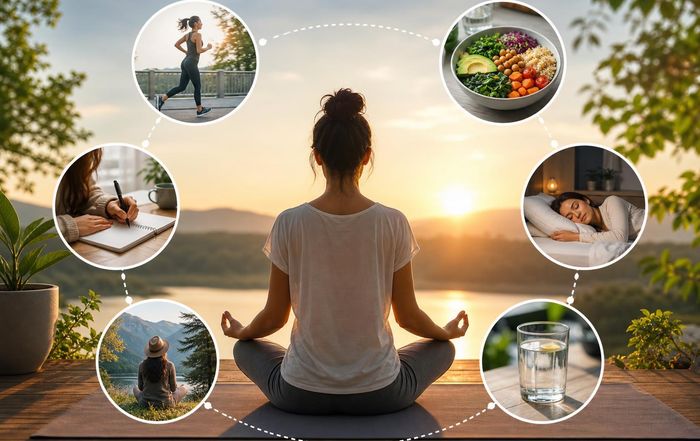
Healthy Routines for Better Mental Balance, oh yes!
A New Era of Women's Wellbeing
Conversations around mental health have shifted from stigma and silence to strategy and structure. Around the world, women leaders, entrepreneurs, caregivers, and creators are recognizing that mental balance is not a luxury or an afterthought, but a decisive factor in performance, resilience, and long-term fulfillment. On HerStage, this shift is felt in every story every day: women in the United States, Europe, Asia, Africa, and South America are redesigning their days with intention, weaving healthy routines into demanding lives so that ambition and wellbeing can coexist rather than collide.
This evolution is driven by multiple forces. The rise of hybrid work, the intensification of digital overload, and the lingering psychological effects of the early 2020s have made mental balance a boardroom topic for Fortune 500 companies and a policy priority for governments from Canada to Singapore. At the same time, advances in psychology and neuroscience have clarified a crucial truth: consistent, realistic daily routines often have a greater impact on mental health than sporadic, dramatic interventions. For the women who read HerStage, the question is no longer whether routines matter, but how to design them intelligently, sustainably, and in alignment with personal and professional goals.
Readers exploring the HerStage sections on women's lives and stories and leadership will recognize a recurring theme: mental balance is now understood as a strategic asset. It enables clearer decisions, stronger relationships, and more creative problem-solving, whether in a startup in Berlin, a classroom in Johannesburg, or an executive suite in New York. The following analysis examines how healthy routines can be structured across the day, why they work, and how women can adapt them across cultures, careers, and life stages.
Morning Foundations: Setting the Mental Tone of the Day
The first hours after waking are increasingly viewed by psychologists and performance experts as a "neurobiological window" during which the brain's chemistry and attention patterns can be shaped for the rest of the day. Research from organizations such as Harvard Medical School has highlighted how early exposure to natural light, gentle movement, and mindful practices can stabilize circadian rhythms and reduce vulnerability to anxiety and low mood. Learn more about evidence-based morning habits through resources like Harvard Health Publishing.
For women balancing careers, caregiving, and personal aspirations, the challenge is not to construct an idealized two-hour ritual but to design a practical, repeatable sequence that can withstand real-world constraints. A structured morning routine might begin with a consistent wake-up time, even across weekends, to support the body's internal clock. Many readers who follow HerStage content on health and wellbeing are experimenting with simple practices such as opening curtains immediately upon waking, stepping briefly onto a balcony in London or a veranda in Sydney, or taking a short walk in natural light before checking messages.
Hydration and nutrition also play a critical role in mental balance during the first part of the day. Stable blood sugar levels and adequate protein intake have been associated with more consistent energy and mood, as outlined by institutions like the Mayo Clinic. Those seeking to refine their morning meals can explore ideas and balanced recipes via Mayo Clinic's nutrition guidance and complement them with practical inspiration from HerStage's food section, where the focus often falls on accessible, culturally diverse options that work for busy professionals and caregivers alike.
Mindful practices such as brief meditation, breathwork, or journaling are no longer niche wellness trends but mainstream tools endorsed by organizations including The American Psychological Association. Even five to ten minutes of focused breathing or reflection has been shown to improve emotional regulation and reduce reactivity later in the day. Those wishing to deepen their understanding of these practices can explore resources from APA's mental health pages and align them with the practical mindset exercises featured on HerStage's mindfulness content hub, where the emphasis is on real-world application rather than perfection.
Workday Structure: Protecting Focus and Emotional Energy
As the workday begins, mental balance becomes a question of boundaries, attention management, and realistic expectations. In 2026, hybrid and remote work arrangements remain prevalent across North America, Europe, and parts of Asia, and while flexibility has brought new freedoms, it has also blurred the lines between professional and personal life. Studies shared by McKinsey & Company and other global consultancies show that women often shoulder disproportionate unpaid labor at home while simultaneously navigating high-pressure roles, leading to chronic cognitive overload and emotional fatigue. Readers interested in these dynamics can explore broader analyses of workplace trends through McKinsey's insights on women in the workplace.
Healthy routines during working hours are therefore less about grand gestures and more about micro-structures that protect focus and emotional bandwidth. Many women are now adopting time-blocking methods, dedicating specific windows to deep work, administrative tasks, collaboration, and recovery. This approach is supported by productivity research from institutions like MIT and Stanford University, which emphasizes that uninterrupted blocks of concentration significantly enhance performance while reducing stress. Those who wish to understand the cognitive science behind focus can consult resources from Stanford Medicine.
Another crucial element is the deliberate management of digital inputs. Constant notifications, social media updates, and news alerts create a state of permanent partial attention that undermines mental balance. Reputable sources such as The World Health Organization have warned about the psychological effects of excessive screen time, particularly when combined with sleep deprivation and social comparison. To mitigate these risks, women are increasingly integrating "notification-free" intervals into their day, using app limits, or physically distancing their phones during deep work sessions. For global guidelines on digital health and mental wellbeing, readers can refer to WHO's mental health resources.
The social dimension of work also plays a central role. Whether in a co-working space in Amsterdam, a corporate headquarters in Tokyo, or a home office in São Paulo, women benefit from rituals that reinforce connection and psychological safety. Regular check-ins with trusted colleagues, peer mentoring circles, and open conversations about workload and boundaries are becoming more common, supported by progressive employers and leadership development platforms. On HerStage, the leadership and career sections highlight stories of women who have formalized these routines, demonstrating that relational practices are not a distraction from productivity but a foundation for sustainable performance.
Movement, Nutrition, and Rest as Daily Non-Negotiables
Beyond the structure of work itself, three pillars consistently emerge as non-negotiable for mental balance: movement, nutrition, and rest. Leading health authorities such as The U.S. Centers for Disease Control and Prevention continue to emphasize that even moderate physical activity can significantly reduce symptoms of anxiety and depression. Whether it is a brisk walk through a park in Stockholm, a yoga session in Bangkok, or a dance class in Cape Town, the key is regularity rather than intensity. Readers can review physical activity guidelines and mental health benefits through CDC's recommendations.
Nutrition routines across the day influence not only physical health but also cognitive clarity and emotional stability. Diets rich in whole foods, fiber, healthy fats, and diverse plant-based ingredients have been associated with better mental health outcomes in research summarized by organizations like NHS UK. Women seeking to refine their eating habits in a realistic, culturally sensitive way can consult NHS guidance on healthy eating and then adapt these principles to their own contexts, supported by recipes and lifestyle inspiration from HerStage's lifestyle and health sections.
Rest, in this context, extends beyond nightly sleep. Short, deliberate breaks during the day, such as stepping away from screens, practicing a few minutes of stretching, or enjoying a mindful cup of tea, help reset the nervous system. However, sleep remains the central restorative mechanism for mental health. Institutions such as The Sleep Foundation and Cleveland Clinic continue to underscore the links between chronic sleep deprivation and mood disorders, impaired judgment, and burnout. Those wanting to refine their evening wind-down routines, adjust light exposure, or address insomnia can explore practical guidance through Sleep Foundation's resources and align them with self-care strategies highlighted on HerStage's self-improvement pages.
Emotional Hygiene and Cognitive Habits
Mental balance is not only about what the body does but also about how the mind interprets events, handles stressors, and narrates the self. In 2026, the concept of "emotional hygiene" has entered mainstream language, popularized by clinical psychologists and mental health educators who compare it to daily physical hygiene: a set of small, consistent practices that prevent minor issues from becoming major crises.
Cognitive-behavioral techniques, once confined mainly to therapy settings, are now being translated into accessible routines that women can apply independently. Organizations such as The Beck Institute for Cognitive Behavior Therapy and academic centers around the world have contributed to these practical frameworks, which include identifying unhelpful thought patterns, challenging catastrophic thinking, and replacing all-or-nothing perspectives with more nuanced interpretations. Readers wishing to understand these methods more deeply can consult resources from Beck Institute and consider how to integrate them into journaling or reflection practices.
Emotional regulation strategies, such as naming feelings, using grounding techniques, or practicing self-compassion, are also gaining prominence. Platforms like Mindful.org and mindfulness research labs at universities in Germany, Australia, and Japan have shown that even brief, regular mindfulness practices can lower stress markers and enhance resilience. Those who want to explore the intersection of mindfulness and daily life can visit Mindful's practice library and then contextualize these learnings through the real-world stories and guidance featured on HerStage's mindfulness and guide sections.
Crucially, emotional hygiene routines must be culturally adaptable. For some women, particularly in collectivist societies in Asia or Africa, community rituals, religious observances, or family storytelling serve as powerful emotional anchors. For others in more individualistic cultures, personal therapy, coaching, or solo reflection may be more central. What unites these approaches is intentionality: the decision to treat emotional processing as a daily discipline rather than an occasional emergency response.
Relationships, Boundaries, and the Social Architecture of Balance
No routine exists in isolation; it is always embedded in a web of relationships. For women, whose social roles often span professional, familial, and community domains, the architecture of relationships can either support or sabotage mental balance. In recent years, organizations such as UN Women and The World Economic Forum have highlighted how gender norms, unpaid care work, and structural inequities continue to shape women's mental health outcomes worldwide. Those interested in the global policy context can explore analyses from UN Women's research pages.
Within this landscape, healthy routines increasingly include explicit boundary-setting. This may involve negotiating domestic responsibilities with partners, setting clear availability windows with colleagues and clients across time zones, or redefining expectations with extended family members. Boundary routines are not about withdrawal, but about creating predictable patterns that protect energy while preserving connection. On HerStage, the women and business sections often feature narratives of women in France, India, South Africa, and beyond who have restructured their weeks to align with both career ambitions and caregiving duties, demonstrating that boundary conversations, while uncomfortable, can become catalysts for more equitable relationships.
Support networks also function as a protective factor for mental balance. Regular check-ins with a small circle of trusted friends, mentors, or peer groups can be integrated into weekly routines, whether through in-person gatherings or virtual meetings across time zones. Research summarized by The National Institutes of Health indicates that perceived social support significantly reduces the impact of stress on mental health outcomes. Women who wish to understand this evidence base can consult NIH's mental health information and then consider how to formalize their own "support rituals," such as recurring calls, shared exercise sessions, or learning groups.
Education, Lifelong Learning, and Cognitive Vitality
Mental balance is not static; it evolves as women acquire new knowledge, adapt to technological shifts, and navigate changing global realities. In 2026, lifelong learning has become both a career necessity and a mental health strategy, as cognitive engagement and skill development are linked to resilience, self-efficacy, and a sense of agency. Institutions such as UNESCO and OECD have repeatedly emphasized the importance of continuous education for women's empowerment and societal progress. Readers can explore global perspectives on learning and wellbeing through UNESCO's education resources.
For HerStage's audience, learning routines may take many forms: short online courses completed after work, language practice during commutes in Madrid or Seoul, leadership development programs offered by employers, or informal study circles focused on topics such as financial literacy, digital skills, or creative arts. Integrating learning into weekly routines helps counteract feelings of stagnation and enhances adaptability in a volatile global economy. The HerStage education section frequently highlights programs, platforms, and personal journeys that illustrate how women from Brazil to Norway are leveraging education not only to advance their careers but also to strengthen their mental resilience.
Cognitive vitality is also supported by creative pursuits and hobbies that offer intrinsic satisfaction rather than external validation. Whether it is painting, writing, gardening, or music, these activities activate different neural networks and provide a counterbalance to the performance-driven demands of modern work. Leading institutions like The National Endowment for the Arts and research centers in Finland and Denmark have drawn connections between arts participation and mental wellbeing. Those interested in these intersections can explore resources from NEA's research on arts and health and consider how to integrate creative time into their weekly structure, even in small increments.
Beauty, Fashion, and the Psychology of Self-Presentation
On HerStage, conversations about beauty, fashion, and glamour are never merely superficial; they are linked to identity, confidence, and mental balance. In 2026, the global beauty and fashion industries, led by brands such as L'Oréal, Estée Lauder, and Gucci, are undergoing a gradual but meaningful shift toward inclusivity and authenticity. While unrealistic standards still exist, there is growing recognition that self-presentation routines can either reinforce self-criticism or become rituals of self-respect.
Morning and evening grooming rituals, when approached as acts of care rather than conformity, can provide moments of grounding and self-connection. For women in high-pressure roles in Zurich, New York, or Hong Kong, even a brief, intentional skincare or styling routine can serve as a transition between roles, signaling a shift from private to public self or from work mode to rest. Industry analyses from sources like Vogue Business and Business of Fashion have documented how consumers are increasingly seeking products and routines that support wellbeing rather than perfection. Readers who want to understand these trends in depth can explore Business of Fashion's industry insights.
However, the psychological impact of beauty and fashion routines depends heavily on the narratives surrounding them. When women view these practices as tools for self-expression, cultural pride, or creative exploration, they can enhance mood and confidence. When routines are driven primarily by comparison and self-judgment, they may erode mental balance. The editorial perspective on HerStage encourages readers to curate rituals that align with their values, bodies, and cultural identities, transforming daily self-presentation from an obligation into a source of quiet strength.
Global Contexts, Local Realities
While the principles of healthy routines for mental balance have universal elements, their implementation must respect local realities, economic conditions, and cultural norms. A woman entrepreneur in Lagos will face different infrastructural and social challenges from a corporate leader in Toronto or a healthcare worker in Bangkok, yet all may share the desire for more stable mental equilibrium. Organizations such as The World Bank and World Economic Forum have underscored how access to healthcare, safe environments, and supportive policies significantly influences the feasibility of individual wellbeing routines. Those interested in how macro-level factors intersect with daily life can explore World Bank's gender and development data.
In regions where formal mental health services remain limited, community-based routines become especially important. Women's cooperatives, faith communities, and local NGOs often create informal support structures that incorporate shared meals, group exercise, microfinance education, and peer counseling. These collective routines can be powerful buffers against stress and isolation, and they illustrate that mental balance is not solely an individual responsibility but a societal one.
For readers in more resource-rich contexts, the challenge is often not scarcity but saturation: an overwhelming array of wellness options, from high-end retreats in Bali to sophisticated digital apps in San Francisco. In such environments, the discipline lies in choosing a few core routines and sustaining them, rather than constantly chasing the next optimization trend. The editorial stance at HerStage favors grounded, evidence-informed practices that can be maintained over years, not weeks, and that are compatible with diverse economic and cultural settings.
Integrating Routines into a Coherent Personal Strategy
Ultimately, healthy routines for better mental balance are most effective when they are integrated into a coherent personal strategy rather than adopted as isolated habits. For the women who turn to HerStage as a positive companion in their journeys through career, business, relationships, and self-discovery, this means aligning routines with deeper questions: What kind of life am I building? What kind of leader, parent, partner, or creator do I want to be? How do I want to feel, not only today but five years from now?
From a practical standpoint, this integration involves periodically reviewing routines across domains-morning and evening structures, workday boundaries, movement and nutrition, emotional hygiene, learning, relationships, and self-presentation-and assessing whether they still serve current realities. Life transitions such as relocation, career changes, parenthood, caregiving for aging relatives, or health challenges will inevitably require adjustments. A routine that supported mental balance during early career years in London may need to be reimagined for midlife leadership in Dubai or semi-retirement in Lisbon.
Trustworthy information, peer examples, and expert perspectives become crucial in this ongoing recalibration. HerStage positions itself as a daily updated educational content platform where women can find such guidance, drawing on global insights while honoring individual nuance. By featuring voices from diverse regions, industries, and life stages, the platform reinforces a central truth: while the specifics of healthy routines may vary, the underlying principles of consistency, compassion, and intentionality are remarkably universal.
The women who thrive will not necessarily be those with the most flawless routines or the most elaborate wellness plans, but those who treat mental balance as a living practice-one that evolves with them, supports their ambitions, and honors their humanity. In that sense, every small, well-chosen routine becomes more than a habit; it becomes an act of leadership over one's own life, and a quiet, powerful statement of what it means to take the stage on one's own terms.
