
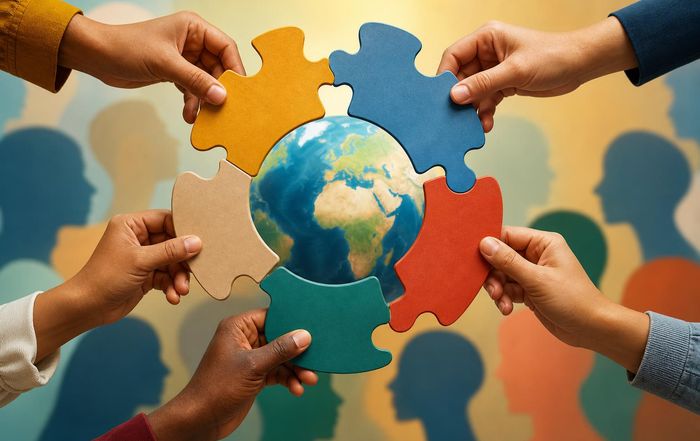
Navigating Cultural Differences in Global Teams: A Practical Guide for Women at Work
Remote work, distributed offices, and international hiring have turned "global teams" from a corporate buzzword into everyday reality. Many professionals now collaborate daily with colleagues in India, Germany, Brazil, the United States, Singapore, or South Africa-sometimes all in the same meeting. For women in particular, these cross-border collaborations can create both powerful opportunities and subtle challenges, especially where gender expectations intersect with national and organizational cultures.
This article explores how cultural differences show up in global teams, what the research says about working across cultures, and how women can navigate these dynamics with confidence and clarity. It focuses on practical strategies you can use whether you are leading a multicultural team, joining one for the first time, or trying to repair misunderstandings that have already occurred.
Along the way, you'll find links to useful resources, and to related coverage on leadership, career, and self-improvement that can help you develop your own approach.
Why cultural differences matter more than ever
Global collaboration is no longer limited to multinationals. Startups, nonprofits, universities, and freelance collectives now assemble teams that cross time zones and national borders. According to the International Labour Organization and other bodies such as the World Economic Forum, cross-border digital work has expanded significantly with the rise of remote and hybrid models, bringing new flexibility but also new coordination challenges. Organizations like SHRM and McKinsey & Company have repeatedly found that diverse teams can outperform more homogeneous groups on innovation and problem-solving-provided they are managed well.
The upside is clear: global teams can bring together varied perspectives, local market knowledge, language skills, and different ways of thinking. That diversity can lead to better products, more inclusive services, and smarter strategic decisions. At the same time, research from institutions such as Harvard Business School and INSEAD shows that cultural misunderstanding is one of the most common sources of friction in global collaboration. Misread emails, conflicting expectations about hierarchy, or different norms around feedback can quickly erode trust if they are not surfaced and addressed.
For women, these dynamics intersect with gender norms. In some contexts, directness from a woman leader is seen as assertive and competent; in others, it may be judged as inappropriate or "too aggressive." Expectations around caregiving, availability outside standard hours, or who speaks first in meetings can vary widely across cultures and can shape whose voices are heard. Understanding these layers is not about stereotyping colleagues; it is about recognizing patterns that may influence how your actions are interpreted, and building the skills to bridge those gaps thoughtfully.
Core cultural dimensions that shape team behavior
Culture is complex, and no framework can fully capture the richness of any society or individual. Still, a few well-researched dimensions can help global teams anticipate where misunderstandings might arise. Work from scholars such as Geert Hofstede, Fons Trompenaars, and Erin Meyer (whose work is often discussed at INSEAD and in leadership programs globally) highlights several recurring contrasts.
One important dimension is communication style. In so-called "low-context" cultures, such as many parts of the United States, Germany, or the Netherlands, people tend to value direct, explicit communication. Saying exactly what you mean is considered respectful and efficient. In many "high-context" cultures, including parts of East Asia, the Middle East, and Latin America, more is conveyed implicitly-through tone, pauses, shared history, or nonverbal cues. A "we'll think about it" might actually mean "no," while silence may signal disagreement or discomfort. When these styles meet in a virtual meeting, a direct speaker can seem rude or insensitive, while a more indirect speaker can be seen as evasive or uncommitted.
Hierarchy and power distance form another dimension. In some cultures, questioning a manager openly is normal and even expected; in others, it may be seen as disrespectful. This shapes who speaks up in meetings, how decisions are made, and how comfortable people feel challenging ideas. It also affects how a woman leader is perceived. In a low-hierarchy environment, her informal style may be read as accessible and modern. In a high-hierarchy context, the same behavior might be interpreted as lacking authority, especially if gender bias is already present.
Time orientation and attitudes toward deadlines can also vary. Some cultures prioritize strict punctuality and detailed planning; others are more flexible, emphasizing relationships and adaptability over rigid schedules. This can create frustration in global projects when one part of the team expects a fixed plan and the other assumes adjustments will be made as circumstances evolve. Finally, attitudes to work-life boundaries differ: some cultures normalize late-night calls and weekend emails, while others protect non-working hours strongly. For women juggling caregiving or other responsibilities, these differences can significantly affect stress levels and perceived performance.
How cultural differences show up in daily collaboration
In practice, cultural differences rarely announce themselves. They tend to surface in everyday interactions: an email that feels surprisingly blunt, a colleague who never turns on their camera, or a manager who always seems to make decisions informally after the meeting has ended. Recognizing these as possible cultural patterns, rather than personal slights, is the first step toward navigating them.
Email and messaging are common flashpoints. In some contexts, short, task-focused messages are the norm; in others, skipping greetings or polite phrases can appear abrupt or disrespectful. Emoji use, response time, and even the choice between email, chat, or voice notes can carry different signals. Global teams benefit from explicit "communication charters" that define expectations: for example, whether same-day responses are expected, when to escalate from chat to a call, and how to handle urgent requests across time zones.
Meetings are another area where norms collide. Some teams value structured agendas, strict timekeeping, and clear next steps; others prioritize open discussion and relationship-building, with decisions emerging gradually. Turn-taking can be influenced by both culture and gender: research summarized by organizations like LeanIn.Org and Catalyst suggests that women are more frequently interrupted in meetings, and this can be amplified when they are in the cultural minority. Leaders can address this by explicitly inviting quieter voices, watching for interruptions, and rotating facilitation roles.
Feedback and conflict are particularly sensitive. In some cultures, giving critical feedback directly is considered honest and efficient; in others, it is softened with positive comments or delivered privately to preserve harmony. Without awareness, a colleague's polite suggestion can mask serious concern, while a blunt comment can feel like a personal attack. Teams that do well across cultures often agree on shared feedback norms-such as using structured frameworks, focusing on observable behavior, and signaling when feedback is intended to be candid rather than personal.
Gender, culture, and power: what women should watch for
Gender norms, national culture, and organizational culture intersect in ways that can either amplify or mitigate bias. Global reports from organizations such as UN Women, the World Bank, and OECD show that women's labor force participation, leadership representation, and legal protections vary significantly across countries. When these macro-patterns meet the micro-reality of a global project team, women can encounter very different expectations depending on who is in the (virtual) room.
One common pattern is the "double bind" around communication. In some settings, women are expected to be warm and collaborative; when they speak directly or assertively, they may face backlash. In others, especially in fields like tech or finance, a more direct style is rewarded-but only up to a point, beyond which women may again be labeled as difficult. Add cultural differences, and the same behavior may be praised by colleagues in one country and criticized by those in another. Being aware of these dynamics does not mean constantly shape-shifting, but it can help in choosing when to adapt, when to explain one's style explicitly, and when to push back.
Authority and credibility are also filtered through cultural lenses. A woman leading a global team may find that her title carries strong weight in some cultures and less in others, where informal seniority or age matter more. In more traditional environments, clients or stakeholders may initially direct questions to male colleagues, even if she is the decision-maker. Organizations can mitigate this by clearly positioning her as the leader in communications, and by having male allies redirect questions back to her in meetings. Individually, women can reinforce their role by stating decisions clearly, summarizing action items, and following up in writing.
Work-life expectations can also diverge. In some countries, late-night work is normalized and may be seen as a sign of commitment; in others, it is discouraged by law or custom. For women who carry a disproportionate share of unpaid care work (a pattern documented by the ILO and UN Women), these differences can create unequal burdens in global teams. Agreeing on fair rotation of inconvenient meeting times, and making performance expectations explicit rather than assuming constant availability, can help level the playing field.
Building cultural intelligence: skills you can develop
Cultural intelligence (often abbreviated CQ) refers to the ability to work effectively across cultures. Unlike personality, it is a set of skills that can be learned and strengthened over time. Research by institutions such as Cultural Intelligence Center and business schools including London Business School and INSEAD highlights four broad components: motivation (your interest in engaging with other cultures), knowledge (understanding of cultural differences), strategy (how you plan for cross-cultural interactions), and behavior (how you adapt your actions).
For individuals, especially women aiming for leadership roles, building cultural intelligence starts with curiosity. That can mean asking respectful questions about local norms, paying attention to who speaks and who stays silent, or reflecting on your own assumptions about what "professional" looks like. It also involves learning to separate intent from impact: assuming that a colleague who behaves differently is not necessarily being rude or resistant, but may be following a different cultural script.
Self-awareness is equally important. Many professionals from dominant cultures-whether that dominance is national, linguistic, or organizational-underestimate how much their own norms shape expectations. Reflecting on your default style (for instance, how you give feedback or handle disagreement) and sharing it openly with colleagues can prevent misunderstandings. It can be helpful to say, "Where I'm from, we tend to be quite direct in emails; if anything I write ever feels too blunt, please tell me." This signals openness and invites others to share their own norms.
Organizations can support cultural intelligence through training and coaching, but individuals can also take initiative. Reading widely from global news outlets such as BBC, Al Jazeera, or The New York Times, following international voices on professional networks, or exploring leadership content from different regions can broaden perspective. Within your company, volunteering for cross-border projects or mentoring colleagues in other locations can provide practical experience that formal training alone cannot match.
Practical strategies for leaders of global teams
Leading a multicultural, multi-time-zone team requires more intentional design than running a co-located team. It is not enough to "treat everyone the same," because people are not starting from the same place in terms of norms, access, or comfort speaking up. Leaders-especially women who are often scrutinized more closely-benefit from a few concrete practices.
First, co-create team norms. Rather than imposing a single way of working, invite team members to discuss preferences around communication, meetings, decision-making, and feedback. Questions might include: How do we want to handle disagreements? What is a reasonable response time to messages? How will we share bad news or escalations? Documenting these norms and revisiting them regularly can prevent many small irritations from escalating into conflict. It also reinforces psychological safety, a concept popularized by research at Harvard Business School and widely adopted in discussions of high-performing teams.
Second, design for inclusion in meetings. Rotate meeting times so the same people are not always joining outside of business hours. Share agendas in advance and invite written input for those who are less comfortable speaking spontaneously in a second language. During the meeting, pay attention to who is speaking and who is not; explicitly invite contributions from quieter participants and protect them from interruptions. Leaders can also normalize different communication styles by paraphrasing and validating contributions, making clear that both direct and more nuanced input are valued.
Third, clarify decision-making. In some cultures, consensus is prized; in others, quick, top-down decisions are expected. Ambiguity about who decides and how can create frustration and power struggles. Leaders can reduce this by stating upfront: "I'll gather input from everyone today, then I will make the final decision by Friday," or "We need consensus among the regional leads before we proceed." Summarizing decisions and next steps in writing is particularly important in global teams, where language fluency and time zones can otherwise leave people uncertain.
Finally, model vulnerability and learning. Admitting when you have misunderstood a cultural cue, and inviting correction, sets a tone that encourages others to do the same. When missteps happen-which they will-address them quickly and privately when appropriate, focusing on impact rather than blame. For women leaders, this kind of openness can counter stereotypes that equate authority with infallibility, and instead highlight a more sustainable, relational style of leadership.
For more perspectives on inclusive leadership, readers may find it helpful to explore related topics in leadership, business, and world coverage.
Navigating as a team member: scripts and tactics you can use
Not everyone is in a formal leadership role, but anyone can influence how a global team functions day to day. For women who may already be navigating bias or under-representation, having a few practical tactics ready can make cross-cultural work feel less daunting and more empowering.
One useful habit is gentle clarification. When a message or comment feels off, try asking a neutral follow-up rather than reacting immediately. Phrases like "Just to make sure I understand…" or "Can you clarify what you meant by…" create space for the other person to restate their point, and sometimes reveal that a perceived slight was simply a linguistic or cultural mismatch. Over time, this approach builds a reputation for fairness and thoughtfulness.
Another tactic is explicit expectation-setting. If you know that late-night calls are challenging because of caregiving responsibilities, you might say to your manager: "I'm fully available between 8 a.m. and 6 p.m. my time. Outside those hours, I can occasionally join critical calls, but I'll need advance notice." Framing this as a professional boundary rather than a personal weakness helps normalize diverse needs across the team. It also aligns with broader conversations about sustainable work practices, which are increasingly highlighted by organizations like the World Health Organization and ILO in the context of mental health and burnout.
When gender and culture collide-for example, if you notice that questions are consistently directed to male colleagues even when you are the expert-you can respond with calm redirection. A simple, "I'll take that one, since I led this part of the project," said consistently, helps re-educate stakeholders without escalating tension. Allies can also play a role here; consider having a quiet conversation with supportive colleagues about redirecting questions to you in future meetings, a technique sometimes called "amplification."
If you are interested in more personal development tools to support this kind of assertiveness, related resources on self-improvement, mindfulness, and lifestyle can help you manage stress and stay grounded while you experiment with new behaviors.
Handling conflict and repair across cultures
Even with the best intentions, misunderstandings and conflicts are inevitable in global teams. What matters is less whether they occur and more how they are handled. Cross-cultural conflict can be complicated by different norms around confrontation: some people are comfortable addressing issues directly, while others prefer to avoid open disagreement to preserve harmony.
When tension arises, private one-to-one conversations are often more effective than public debates, especially in high-context or high-hierarchy cultures where saving face matters. Starting with shared goals-"We both want this project to succeed"-and then describing specific behaviors and their impact can keep the focus on collaboration rather than blame. It may help to acknowledge cultural differences explicitly: "I realize our communication styles are different; I tend to be very direct, and I'm worried that might have come across more strongly than I intended."
Mediators or cultural liaisons can also be valuable. In larger organizations, HR partners or diversity and inclusion specialists may be trained in cross-cultural facilitation. Professional bodies such as CIPD or SHRM increasingly offer guidance on managing multicultural workplaces, and some companies invest in external coaches with expertise in intercultural communication. Even in smaller teams, an experienced colleague who understands both sides' contexts can help reframe issues and suggest compromises.
Repairing trust after a serious misstep takes time. It may involve apologizing for unintended offense, adjusting certain behaviors, and demonstrating over time that lessons have been learned. For women, there can be an added pressure not to appear "emotional" or "overly sensitive," which sometimes leads to silence in the face of microaggressions. Balancing self-advocacy with cultural awareness is a personal judgment call; some choose to address patterns only once they are clear and repeated, while others speak up earlier. Whatever your approach, documenting incidents and seeking confidential advice-from mentors, employee resource groups, or professional networks-can provide perspective and support.
Designing organizations where global women can thrive
While individual skills and tactics matter, the responsibility for navigating cultural differences cannot rest solely on women or on those from non-dominant cultures. Organizations that want to harness the full benefits of global teams need to design systems and policies that support equity and inclusion across borders.
This starts with recruitment and promotion. Ensuring that leadership pipelines include women from multiple regions, not only from headquarters, sends a signal about whose perspectives are valued. Transparent criteria for advancement, standardized performance reviews, and diverse promotion panels can reduce the impact of local biases. Initiatives such as cross-border sponsorship programs, where senior leaders actively advocate for high-potential women in other regions, can help counter structural barriers documented by research from groups like McKinsey & Company and LeanIn.Org.
Training is another lever. Rather than one-off "cultural awareness" workshops, organizations can embed cross-cultural skills into leadership development, onboarding, and manager training. That might include modules on virtual collaboration, inclusive meeting facilitation, and navigating gender norms across markets. Making such training mandatory for managers of global teams, rather than optional for "interested" employees, helps shift responsibility from individuals to the system.
Policies around flexible work, parental leave, and caregiving support also matter, particularly when teams span countries with very different legal protections. While companies must comply with local laws, many choose to offer global minimum standards that exceed legal baselines in some markets, in order to create a more level playing field. Communicating these clearly and ensuring they are accessible in multiple languages helps women in different regions understand their rights and options.
Finally, organizations can foster community. Global women's networks, mentoring circles, and internal communities of practice provide spaces where women can share strategies for navigating cultural differences, compare experiences, and advocate collectively for change. These networks are most effective when they are supported by senior leadership, connected to decision-making forums, and open to collaboration with other diversity groups, including those focused on race, ethnicity, disability, and LGBTQ+ inclusion.
For readers interested in broader social and policy contexts that shape these organizational choices, coverage in sections such as world, education, and women can provide additional perspective.
Bringing it all together
Working in global teams is no longer a niche skill; it is becoming a core part of professional life across sectors, from technology and finance to education, health, and the creative industries. Cultural differences-around communication, hierarchy, time, gender, and more-are not obstacles to be eliminated but realities to be understood and navigated. When individuals build cultural intelligence, leaders design inclusive structures, and organizations invest in equitable systems, those differences can become a source of strength rather than friction.
For women, the stakes are particular. Cross-cultural collaboration can open doors to international assignments, leadership roles, and rich professional networks. It can also expose them to conflicting expectations and layered biases. Navigating this terrain requires both strategic awareness and self-trust: the willingness to learn about others' norms, and the confidence to articulate one's own needs and boundaries.
Ultimately, thriving in global teams is less about mastering a checklist of cultural dos and don'ts and more about cultivating habits of curiosity, clarity, and courage. Asking one more question instead of making an assumption. Clarifying a decision instead of living with quiet confusion. Naming a pattern instead of silently absorbing its impact. These small acts, repeated over time, not only make collaboration smoother; they also help reshape what global leadership looks like-for women and for everyone who works alongside them.
