
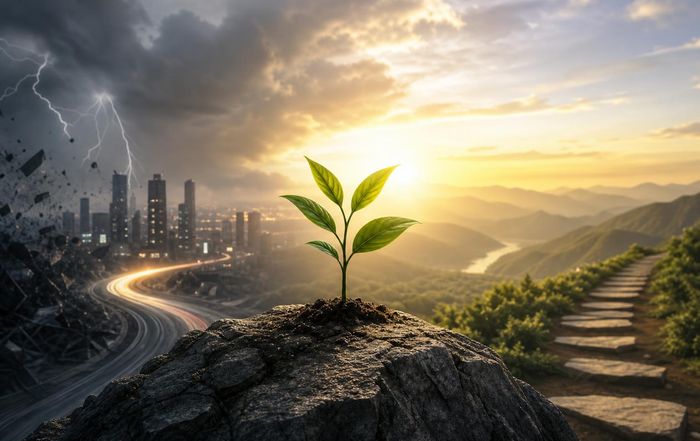
How Women Can Thrive in a Rapidly Changing World
The pace of change in business, technology, and society has become not just rapid but relentless, and for women across the world, from the United States and United Kingdom to Singapore, South Africa, and Brazil, this volatility presents both unprecedented opportunity and real risk. On HerStage, where the main focus is on amplifying women's voices and journeys, the question is no longer how to merely keep up, but how to intentionally thrive, lead, and shape this new era with clarity, confidence, and purpose. Thriving in a rapidly changing world now demands a strategic blend of self-leadership, continuous learning, health and wellbeing, financial and career resilience, and a deeply grounded sense of identity that can withstand external turbulence while still remaining open to transformation.
Redefining Leadership for an Age of Constant Disruption
The traditional, hierarchical model of leadership has been steadily losing relevance, and in 2026 the leaders who stand out, whether in Fortune 500 boardrooms or early-stage startups, are those who combine emotional intelligence with strategic foresight and ethical clarity. For women, this shift is particularly significant because it aligns more closely with leadership styles that research has long associated with female executives, such as collaborative decision-making, active listening, and inclusive problem-solving. Resources that explore modern leadership competencies, such as the content on HerStage leadership features, now sit alongside global frameworks like those outlined by the World Economic Forum, where readers can explore the future of jobs and skills to understand how leadership expectations are evolving across continents and industries.
In this environment, leadership is less about title and more about influence and impact. A mid-level manager in Berlin, a founder in Lagos, and a policy advisor in Ottawa may each lead in different ways, yet the underlying capabilities are converging around adaptability, cross-cultural fluency, and the capacity to make decisions under uncertainty. Organizations such as Harvard Business School provide in-depth perspectives on these competencies, and those who wish to learn more about adaptive leadership can see how resilience and experimentation are becoming non-negotiable attributes. For women, thriving as leaders also means navigating persistent bias and structural barriers, but the new leadership landscape rewards those who can translate lived experience into empathetic strategies that resonate with diverse teams and stakeholders.
Building Self-Leadership as the Foundation of Thriving
Before any woman can effectively lead teams or organizations, she must first master the art of leading herself. Self-leadership in 2026 involves a rigorous and honest assessment of personal values, strengths, and limitations, combined with a proactive approach to emotional regulation and decision-making. In a world where news cycles, social media feeds, and workplace demands compete for attention, the ability to set boundaries and intentionally direct energy has become a core professional skill rather than a purely personal preference. The self-reflective practices highlighted in HerStage self-improvement insights offer a useful starting point for women who want to design a life that is both ambitious and sustainable.
Psychologists and performance coaches increasingly emphasize that thriving is less about eliminating stress and more about cultivating the capacity to respond to it constructively. The American Psychological Association has compiled guidance on how individuals can develop resilience in uncertain times, underscoring that resilience is a learnable set of behaviors rather than an innate trait. For women balancing caregiving responsibilities, demanding careers, and personal aspirations, self-leadership includes the courage to say no, the discipline to prioritize deep work over constant responsiveness, and the self-compassion to recognize that growth often involves temporary discomfort and imperfection.
Lifelong Learning as a Strategic Imperative
The acceleration of artificial intelligence, automation, and digital transformation has made lifelong learning indispensable for women who wish to remain relevant and competitive in their careers, whether they are in finance in London, technology in Bangalore, healthcare in Toronto, or creative industries in São Paulo. The OECD has repeatedly highlighted the importance of continuous upskilling, and those who want to understand global skills trends can see how quickly demand is shifting toward complex problem-solving, digital literacy, and social-emotional competencies. For women, strategic learning means not just accumulating certificates but choosing learning pathways that align with long-term career narratives and personal values.
Digital platforms and universities have responded with flexible options, from micro-credentials to modular degrees, and institutions such as MIT make it possible to explore cutting-edge courses in technology and innovation. Yet the real differentiator for women is not access alone but intentionality: identifying which skills will open doors to leadership roles, entrepreneurship, or cross-border opportunities, and then building learning routines that fit around work and family responsibilities. On HerStage, the emphasis on education and growth reflects a recognition that learning is no longer confined to early adulthood; it is a lifelong strategy for autonomy, negotiation power, and creative self-determination in a volatile global economy.
Health, Energy, and the Physiology of High Performance
Thriving in a rapidly changing world is impossible without a stable foundation of physical and mental health. The demands of hybrid work, constant connectivity, and global collaboration across time zones have blurred boundaries between professional and personal life, and women often bear a disproportionate share of invisible labor in households and communities. This makes energy management, rather than simple time management, a critical discipline. The World Health Organization provides extensive resources on mental health and wellbeing, highlighting the rising incidence of burnout and anxiety, particularly among working women in high-pressure sectors.
On HerStage, the focus on health and wellbeing recognizes that nutrition, sleep, movement, and stress management are not peripheral concerns but core enablers of leadership and creativity. Research from institutions like Mayo Clinic, where readers can explore evidence-based health guidance, reinforces that even modest, consistent habits such as daily walking, structured breaks, and digital detox periods can significantly enhance cognitive performance and emotional stability. For women in leadership roles, modeling healthy boundaries-leaving work on time, taking vacations, normalizing therapy or coaching-also sets cultural norms that protect teams from unsustainable expectations, thereby multiplying the impact of individual health choices across entire organizations.
Food, Culture, and Sustainable Performance
Food has long been understood as fuel, but in the context of a rapidly changing world, it is also increasingly recognized as a lever for cognitive clarity, mood regulation, and long-term disease prevention. Women who travel frequently for work or manage intense schedules may find their eating habits dictated by convenience rather than intention, yet the science of nutrition continues to demonstrate that stable blood sugar, adequate protein, and micronutrient-rich diets support sustained concentration and resilience. The Harvard T.H. Chan School of Public Health offers accessible research on healthy eating patterns, which can help women design practical food strategies that work in diverse cultural and professional contexts.
At the same time, food is a powerful connector across borders and generations, and many women are reclaiming food rituals as a way to anchor themselves amid constant change. The culinary explorations and recipes featured on HerStage food stories illustrate how cooking can become both a creative outlet and a mindfulness practice. Organizations such as UN Women also highlight the role of women in global food systems, and those who wish to learn more about women's economic empowerment in agriculture and food will see how food intersects with climate resilience, community health, and local entrepreneurship from Thailand to Nigeria. For women who lead, understanding food as both personal nourishment and a strategic economic sector opens new avenues for impact.
Beauty, Fashion, and Identity in a Digital Era
The worlds of beauty and fashion have undergone profound transformation as social media, e-commerce, and digital influencers reshape how women see themselves and how brands communicate. In 2026, women from Seoul to Stockholm are navigating a complex landscape where beauty standards are simultaneously diversifying and becoming more pervasive through algorithms and filters. On HerStage, the curated perspectives in beauty and fashion challenge readers to view style not as conformity but as a language of self-expression and leadership presence.
Global conversations about inclusive beauty, driven in part by organizations like Allure and Vogue, and supported by research from entities such as Dove's Self-Esteem Project, which invites readers to explore body image and confidence resources, are reshaping how women talk about appearance. In professional contexts, appearance still influences perceptions of credibility and authority, and women must often navigate coded expectations around dress, hair, and makeup. However, the rise of remote work and global teams has also created more room for authenticity and cultural specificity in personal presentation. Women who thrive in this environment are those who intentionally craft a visual identity that aligns with their values and ambitions while resisting the pressure to erase age, ethnicity, or individuality in pursuit of a narrow ideal.
Mindfulness, Mental Clarity, and Emotional Agility
The cognitive load of constant change can be overwhelming, particularly when combined with the emotional demands of caregiving, activism, or organizational leadership. Mindfulness and contemplative practices have therefore moved from the margins of wellness culture into the mainstream of corporate and educational strategy. Many leading companies, including Google and SAP, have integrated mindfulness training into leadership development, and organizations like Mindful.org provide accessible resources for those who want to learn more about mindfulness in daily life. On HerStage, the focus on mindfulness and inner balance highlights how these practices can serve as powerful tools for women who must make complex decisions while maintaining clarity and compassion.
Emotional agility, a concept popularized by psychologists and increasingly adopted in executive coaching, involves the ability to acknowledge and process emotions without being dominated by them. This is particularly relevant in a world where global crises-from climate events to geopolitical conflicts-can trigger chronic stress and a sense of helplessness. Institutions such as Yale Center for Emotional Intelligence, which offers insights into how emotions shape decision-making, demonstrate that leaders who can skillfully navigate their own emotional landscapes are better equipped to support teams, negotiate conflict, and sustain long-term motivation. For women, who are often socialized to prioritize harmony over honest expression, cultivating emotional agility can be a transformative step toward more authentic and effective leadership.
Career Strategy and the New World of Work
The global job market in 2026 is characterized by hybrid work models, cross-border collaboration, and increasing reliance on digital platforms for recruitment, networking, and performance evaluation. Women who want to thrive must treat their careers not as linear ladders but as evolving portfolios of skills, relationships, and experiences. On HerStage, the guidance in career development features reflects this shift, encouraging readers to think in terms of career experiments, lateral moves, and entrepreneurial ventures rather than waiting passively for promotion within a single organization.
Professional networks such as LinkedIn have become essential tools for visibility and opportunity discovery, and those wishing to strengthen their digital professional presence can leverage thought leadership posts, project showcases, and cross-industry connections. Meanwhile, organizations like McKinsey & Company continue to publish influential research on women in the workplace, highlighting persistent gaps in representation at senior levels as well as strategies that have proven effective in closing them. For women across Europe, Asia, Africa, and the Americas, thriving in this new world of work involves both individual tactics-such as negotiation skills, personal branding, and strategic job changes-and collective advocacy for policies that support parental leave, flexible work, and pay equity.
Business, Entrepreneurship, and Financial Resilience
Economic uncertainty, inflationary pressures, and technological disruption have made financial resilience a central pillar of thriving. Increasingly, women are turning to entrepreneurship, side ventures, and investment as ways to diversify income and gain greater control over their economic futures. On HerStage, the coverage of business and entrepreneurship underscores that building a company or a portfolio is not only about profit but also about autonomy, creativity, and impact. Organizations like Goldman Sachs have documented the outsized community benefits generated by women-led businesses, and readers can explore initiatives that support female entrepreneurs to understand the broader economic significance of women's financial empowerment.
At the same time, understanding macroeconomic trends and financial tools has become more important than ever. Platforms such as Investopedia provide accessible explanations for those who want to learn more about investing, inflation, and financial planning, helping women in countries as diverse as Canada, India, and Nigeria make informed decisions about savings, retirement, and risk. In a rapidly changing world, thriving financially does not necessarily mean chasing the highest possible returns; rather, it involves constructing a financial strategy that can absorb shocks, support personal and family goals, and create room for strategic career moves or sabbaticals without catastrophic consequences.
Lifestyle Design and the Art of Intentional Living
Thriving is not solely a professional or financial concept; it is deeply intertwined with how women design their days, relationships, and environments. The notion of lifestyle design has matured from a niche concept into a mainstream conversation about how to align daily routines with long-term aspirations and values. On HerStage, the emphasis on lifestyle curation recognizes that women in New York, Paris, Nairobi, and Sydney alike are seeking ways to integrate ambition with joy, rest, and connection. This can involve choices about where to live, how to structure work hours, what communities to engage with, and which digital platforms to embrace or avoid.
Global trends toward remote work and digital nomadism have opened new possibilities, but they have also raised questions about belonging, stability, and community. Organizations such as OECD and World Bank track urbanization and mobility trends, showing how cities and regions are evolving in response to demographic shifts and technological change. Women who thrive in this context are those who periodically step back to reassess whether their current lifestyle supports or undermines their mental health, relationships, and sense of purpose. They approach life as an ongoing design project rather than a fixed script, making adjustments as careers evolve, families grow, and personal priorities shift.
Glamour, Visibility, and the Power of Story
In a media-saturated age, visibility has become a form of currency, and glamour-broadly defined as the ability to capture attention and imagination-plays a significant role in how women build influence and open doors. On HerStage, the exploration of glamour and public presence is not about superficial display but about understanding how storytelling, aesthetics, and public platforms can be harnessed to advance meaningful work. From social entrepreneurs in Nairobi to filmmakers in Los Angeles and activists in Stockholm, women are learning to use visual storytelling, personal branding, and media engagement to amplify their impact.
Major media outlets such as BBC and The New York Times, where readers can follow global stories and profiles of influential women, continue to shape narratives about what female success and leadership look like. Women who thrive in this environment are intentional about the stories they tell about themselves, both online and offline, and they cultivate the courage to be seen in their complexity rather than conforming to one-dimensional archetypes. Glamour, in this sense, becomes a strategic tool: a way to attract resources, allies, and opportunities while remaining anchored in authenticity and ethical responsibility.
A HerStage Perspective: Thriving as an Ongoing Practice
For the global loyal network of women who turn to HerStage for insight, inspiration, and practical guidance, thriving in a rapidly changing world is best understood not as a final destination but as an ongoing practice that touches every dimension of life. It is the practice of self-leadership that clarifies what truly matters; the discipline of continuous learning that keeps skills relevant; the commitment to health, food, and mindfulness that sustains energy and clarity; the strategic shaping of career and financial paths that enables autonomy; and the thoughtful curation of beauty, fashion, lifestyle, and glamour that expresses identity and attracts opportunity.
As volatility continues across economies, technologies, and cultures, the women who will not only endure but flourish are those who refuse to see themselves as passive recipients of change. Instead, they act as deliberate architects of their own narratives, drawing on global knowledge from sources such as the World Economic Forum, Harvard, UN Women, and others, while grounding their choices in the lived realities of their local contexts and personal histories. In this sense, thriving is both deeply personal and inherently collective, because each woman who claims her full agency contributes to a broader shift in what leadership, success, and possibility look like for women everywhere. On HerStage, that amazing evolving story continues to unfold, one intentional decision, one courageous reinvention, and one shared insight at a time.
